
Artificial Intelligence is everywhere today.
You see it in chatbots, search engines, smartphones, and even content creation tools. One AI system that has gained huge attention recently is Gemini AI from Google. But many people still ask a simple question:
How does Gemini AI actually work?
If you have ever wondered what happens behind the scenes when Gemini answers questions, writes content, explains coding, or analyzes images, this guide will explain everything in simple language.
No technical jargon. No confusing AI theories.
Just a practical and beginner-friendly explanation.
By the end of this article, you will understand how Gemini thinks, learns, and responds — even if you are completely new to artificial intelligence.
What Is Gemini AI? (Simple Definition)
Before understanding how Gemini works, let’s first understand what it actually is.
Gemini AI is an advanced artificial intelligence model created by Google and developed by Google DeepMind.
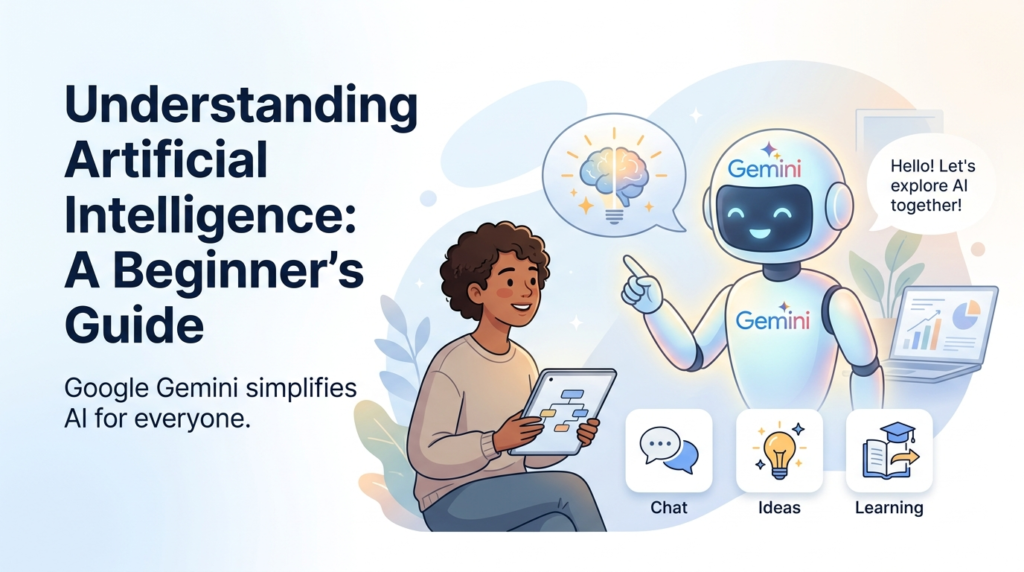
In simple words, Gemini is an AI assistant designed to understand human language, process information, and generate intelligent responses.
You can ask it questions like:
- “Explain SEO in simple words”
- “Write a blog outline”
- “Summarize this document”
- “Help me learn coding”
- “Analyze this image”
And within seconds, it responds in a conversational way.
If you want a beginner-friendly overview of Gemini itself, you can also read your guide on Google Gemini AI explained for beginners for a deeper understanding.
Unlike older AI systems that mostly handled text, Gemini is built to understand multiple types of information including:
- Text
- Images
- Code
- Audio (in some environments)
- Complex reasoning tasks
This makes it what experts call a multimodal AI system.
According to Google’s official Gemini documentation, Gemini was designed to understand information more naturally and solve complex tasks better than earlier language models.
How Gemini AI Actually Works (Simple Explanation)
Here is the easiest way to understand Gemini AI:
Gemini works by predicting what information should come next based on patterns it learned during training.
Think about how your phone predicts the next word while typing.
For example:
You type:
“I am going to the…”
Your keyboard may predict:
“market”
Why?
Because it has learned language patterns.
Gemini works similarly — but at a much larger and smarter level.
Instead of predicting one word casually, Gemini analyzes massive amounts of information and predicts responses that make sense based on context.
Here’s the simple process:
Step 1: Gemini Receives Your Prompt
Everything starts with your question.
For example:
“Explain blogging for beginners.”
Gemini first reads and understands your request
It tries to figure out:
- What are you asking?
- What level of explanation is needed?
- What context matters?
- What type of answer should be generated?
This stage is called language understanding.
Instead of simply matching keywords, Gemini tries to understand intent.
For example:
If someone asks:
“Best AI tool for blogging?”
Gemini understands that the user wants recommendations, comparisons, and practical advice — not dictionary definitions.
That is why answers feel conversational.
Step 2: Gemini Understands Patterns Instead of “Thinking”
One common misunderstanding is this:
Gemini does not think like humans.
It does not have emotions, opinions, memories, or consciousness.
Instead, it recognizes patterns.
Imagine reading thousands of books about cooking.
Eventually, you start understanding recipes, ingredients, and cooking methods.
Gemini learns in a similar way.
It studies huge datasets during training and learns relationships between:
- Words
- Sentences
- Topics
- Questions
- Human behavior patterns
So when you ask something, Gemini predicts the response that statistically makes the most sense.
That means:
Gemini sounds smart because it has learned patterns extremely well.
Not because it “thinks” like a person.
If you want a deeper beginner explanation of the Gemini language model and how it processes information, you can explore your detailed guide on that topic as well.
Step 3: Gemini Uses a Large Language Model (LLM)
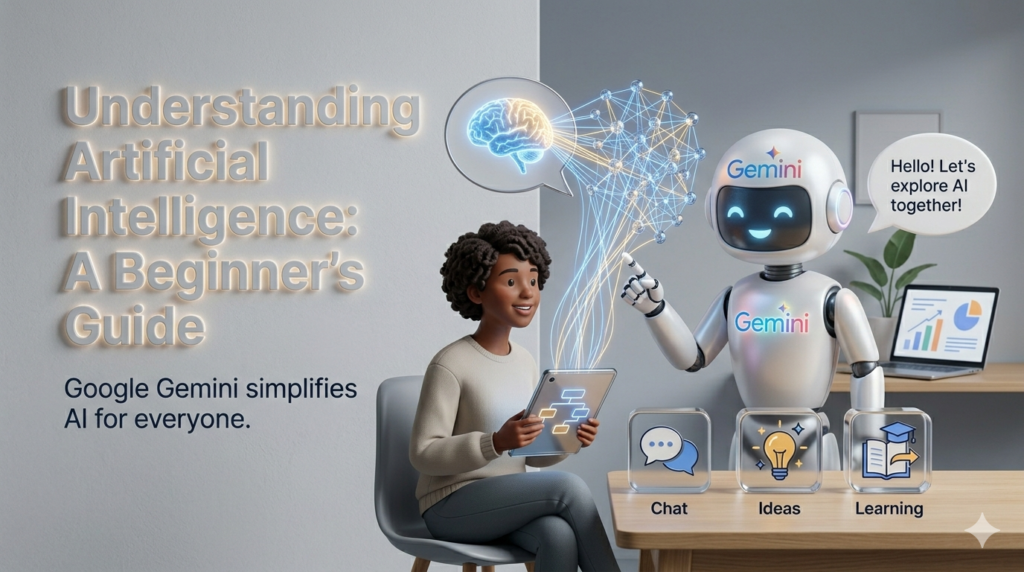
At the heart of Gemini is something called a Large Language Model (LLM).
A large language model is basically a system trained on massive datasets to understand language and generate responses.
In simple words:
It learns how humans communicate.
Think of it like this:
Imagine a student reading:
- Books
- Articles
- Websites
- Conversations
- Research papers
For years.
Eventually, that student becomes really good at explaining topics.
Gemini works similarly — but at enormous scale.
Instead of memorizing answers, it learns patterns inside language.
This allows Gemini to:
- Answer questions
- Write content
- Summarize text
- Explain concepts
- Translate information
- Generate ideas
According to research from Google DeepMind, Gemini models are designed to handle reasoning, coding, and multimodal understanding more effectively than traditional text-only systems
Step 4: Gemini Understands Context
One thing that makes Gemini feel intelligent is context awareness.
For example:
If you ask:
“Tell me about SEO.”
Gemini may explain search engine optimization.
Then if you ask:
“How long does it take?”
Gemini understands you are still talking about SEO.
It remembers the flow of conversation.
This is called contextual understanding.
Without context, conversations would feel robotic.
Instead of natural dialogue, every answer would reset.
This is also why Gemini often feels more human during long conversations.
Gemini Does Not Search the Internet Every Time
Many people assume Gemini searches the internet for every answer.
That is not fully true.
Most responses come from patterns learned during training.
Gemini generates answers using its trained knowledge and reasoning.
However, in some situations and tools, it may also access updated information depending on integrations and settings.
For example:
- Real-time search features
- Connected Google tools
- Web-enabled environments
This is why some answers feel highly current while others rely on learned information.
A good comparison of how different AI assistants handle blogging and content generation can be seen in your article about ChatGPT vs Google Gemini for blogging, especially if you are trying to choose the best workflow for SEO content.
Why Gemini Sometimes Gives Wrong Answers
Here is something important:
Gemini is powerful.
But it is not perfect.
Sometimes AI generates incorrect information.
This happens because Gemini predicts likely answers instead of truly understanding facts like humans do.
Experts often call this an AI hallucination.
For example:
If information is unclear, incomplete, or confusing, Gemini may confidently produce inaccurate responses.
That is why fact-checking matters.
Especially for:
- Medical information
- Legal advice
- Financial topics
- Research-based content
Even experts recommend verifying important details using trusted sources.
How Gemini Understands Images and Text Together
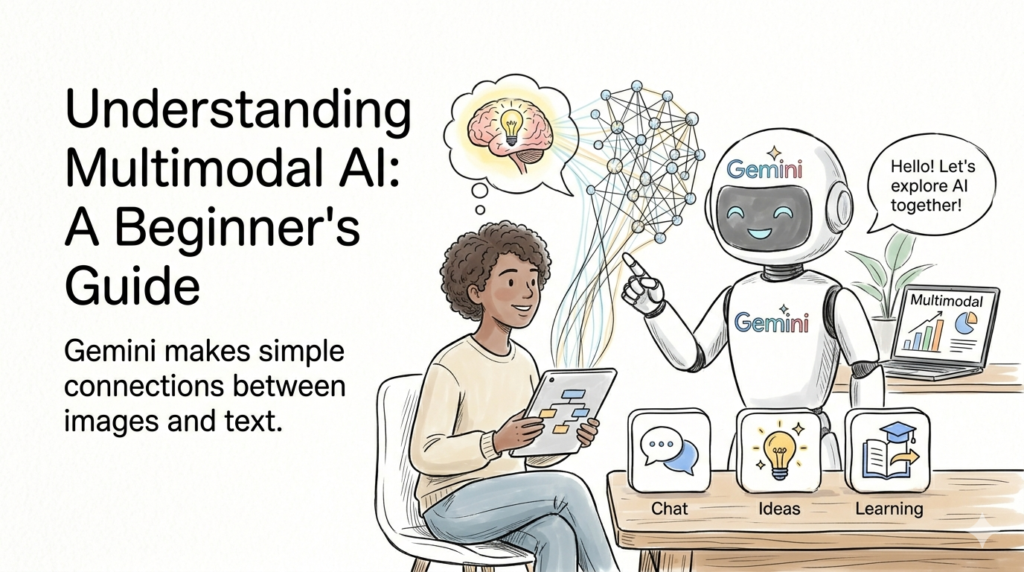
One of Gemini’s biggest strengths is multimodal understanding.
That sounds technical.
But the meaning is simple.
Gemini can understand different formats of information together.
For example:
You upload an image and ask:
“Explain what is happening here.”
Gemini can analyze:
- Visual elements
- Text inside images
- Objects
- Context clues
Then provide explanations.
This makes Gemini useful for:
- Learning
- Education
- Content creation
- Coding help
- Image analysis
- Productivity tasks
People who want to experiment with prompts and workflows often also explore Google AI Studio for beginners, where developers and creators can better understand how advanced Gemini interactions work.
How Gemini Learns During Training
A common question people ask is:
“Does Gemini learn while chatting with me?”
The short answer is:
Not exactly.
Gemini does not suddenly become smarter during one normal conversation like a human learning a new skill.
Instead, Gemini becomes powerful through a process called training.
Think of training like this:
Imagine a student reading millions of books, articles, examples, conversations, and educational material.
Over time, the student starts understanding:
- Grammar
- Patterns
- Context
- Problem solving
- Relationships between ideas
Gemini works in a similar way.
During training, the AI studies massive amounts of information and learns patterns inside language.
For example:
If the model repeatedly sees:
“The capital of France is Paris.”
It starts recognizing the relationship between
France → Paris
But Gemini is not memorizing information like a school student cramming for exams.
Instead, it learns patterns and probabilities.
That is why Gemini can explain the same concept in many different ways.
For example:
You ask:
“Explain SEO.”
Gemini may explain it:
- For beginners
- Like a teacher
- Like a marketer
- With examples
- In simple language
This flexibility comes from pattern learning.
What Makes Gemini Feel So Human?
Sometimes AI responses feel surprisingly natural.
You may wonder:
“How is Gemini talking like a real person?”
The answer is simple:
Gemini is trained on conversational language patterns.
It learns how humans naturally:
- Ask questions
- Explain ideas
- Tell stories
- Give examples
- Structure conversations
That is why responses feel smooth instead of robotic.
For example:
A robotic answer might say:
SEO means search engine optimization.
A human-style Gemini answer may say:
Think of SEO as helping Google understand your website so more people can discover it.
Notice the difference?
The second version feels easier and more conversational.
This style makes AI more useful for:
- Students
- Bloggers
- Businesses
- Creators
- Everyday users
According to research shared by Google DeepMind, modern AI systems are increasingly designed to improve reasoning, context understanding, and natural interactions.
How Gemini Understands Meaning Instead of Keywords
Older systems often depended heavily on keywords.
Gemini is more context-driven.
For example:
Imagine you ask:
“Apple price”
That sentence is confusing.
Are you asking about:
- Fruit prices?
- Company stock?
- A phone?
Now imagine this:
“What is the latest Apple phone price?”
Suddenly, context becomes clear.
Gemini understands the meaning behind the sentence.
This ability is one reason AI feels smarter today.
Instead of blindly matching words, it tries to understand user intent.
This is useful in blogging too.
For example, if someone searches:
“How Gemini AI works for beginners”
They usually want:
- A simple explanation
- Easy examples
- No technical confusion
Understanding intent matters in both SEO and AI.
Real-Life Example: How Gemini Generates an Answer
Let’s simplify the process.
Imagine you type:
“Explain digital marketing in simple words.”
What happens behind the scenes?
Step 1: Gemini Reads the Prompt
It first understands your request.
Questions it tries to identify:
- What topic?
- What complexity level?
- What format?
- What user intent?
Here:
Topic = digital marketing
Level = simple explanation
Intent = learning
Step 2: It Predicts Relevant Patterns
Gemini analyzes patterns learned during training.
It recognizes relationships between:
- Marketing
- Advertising
- Online promotion
- SEO
- Social media
Step 3: It Builds a Response
Instead of copying text from somewhere, Gemini generates fresh wording.
Example response:
Digital marketing simply means promoting products or services online using platforms like search engines, social media, email, and websites.
This is why answers usually feel unique.
Why Gemini Is Called “Multimodal AI”
You may have heard people say:
Gemini is multimodal.
Sounds complicated.
But it is actually simple.
Multimodal means:
Gemini can understand multiple types of information together.
Not just text.
It can process things like:
- Images
- Documents
- Code
- Language
- Visual information
For example:
You upload a screenshot and ask:
“What error is this?”
Gemini may read text inside the image, understand the issue, and explain solutions.
Or imagine uploading a chart and asking:
“Explain this data.”
Gemini can interpret both visual and written context.
This makes Gemini different from many older AI systems.
You can explore more about Gemini tools and experiments through Google AI Studio if you want beginner-friendly hands-on experience
Gemini vs Traditional Search Engines
People often confuse Gemini with search engines.
But they work differently.
Here is the simple difference:
Search Engine
A search engine finds webpages.
Example:
You search:
Best blogging tips
You receive links to articles.
Gemini AI
Gemini generates explanations.
You ask:
How do I start blogging?
Gemini gives a conversational answer instantly.
In simple words:
Search engines help you find information.
Gemini helps you understand information.
Of course, both can work together.
Many creators use AI for learning and search engines for verification.
For updated information and official announcements, users still rely on resources from Google and trusted websites.
Can Gemini Think Like Humans?
This is one of the biggest myths.
The truth:
No, Gemini does not think like humans.
It may sound intelligent.
But intelligence here works differently.
Humans think using:
- Emotions
- Experiences
- Personal memories
- Conscious reasoning
Gemini does not have those things.
It predicts responses using patterns.
For example:
If Gemini sounds emotional:
“I understand your frustration.”
That does not mean it feels emotions.
It is simply generating language patterns that fit the situation.
This distinction matters.
Because understanding AI limitations helps you use it better.
Where Gemini Is Most Useful
Gemini is especially powerful for productivity and learning.
For example:
Learning New Topics
Students use Gemini to simplify difficult concepts.
Example:
Explain physics like I’m 10 years old.
Blogging and Content Ideas
Writers use Gemini for:
- Blog outlines
- Topic research
- Content ideas
- Headline generation
Coding Help
Developers ask Gemini to:
- Explain errors
- Write sample code
- Debug problems
Productivity
Professionals use Gemini for:
- Summaries
- Brainstorming
- Emails
- Research support
For a practical beginner overview of Gemini and its ecosystem, many readers also explore your guide about Google Gemini AI explained for beginners, especially before diving into advanced use cases.
Does Gemini Replace Human Intelligence?
Not really.
The smartest way to think about Gemini is this:
Gemini is an assistant, not a replacement for human thinking.
For example:
Bad workflow:
Copy everything Gemini says without checking.
Better workflow:
Use Gemini for speed and ideas, then apply human judgment.
That combination usually produces the best results.
Especially for:
- Blogging
- Business decisions
- Research
- SEO
- Learning
Human thinking still matters.
Because AI can be fast.
But accuracy, creativity, and experience still need human input.
Common Misconceptions About Gemini AI
Because AI is growing fast, many people misunderstand how Gemini actually works.
Let’s clear up some common myths.
Myth 1: Gemini Knows Everything
This is false.
Gemini is powerful, but it does not know every fact with perfect accuracy.
Sometimes it may:
- Miss context
- Generate outdated information
- Misunderstand prompts
- Produce inaccurate answers
That is why important information should always be verified using trusted sources.
Especially for:
- Health topics
- Legal information
- Financial decisions
- Academic research
Myth 2: Gemini Thinks Like Humans
Another misunderstanding is that Gemini “thinks.”
In reality:
Gemini predicts likely responses based on patterns.
It sounds intelligent because it has learned language structures at massive scale.
But it does not have:
- Emotions
- Consciousness
- Personal memories
- Human opinions
Think of Gemini as a highly advanced prediction engine rather than a digital brain.
Myth 3: Gemini Replaces Human Creativity
Not really.
The best results happen when humans and AI work together.
For example:
A blogger may use Gemini to:
- Generate blog ideas
- Create outlines
- Improve readability
- Research concepts
But human creativity still matters for:
- Personal experiences
- Storytelling
- Unique insights
- Brand voice
- Real expertise
This is especially important in SEO content.
Search engines increasingly reward content with experience, trust, and originality.
How to Use Gemini Smarter (Beginner Tips)
If you want better responses from Gemini, the secret is simple:
Ask better questions.
Many beginners write prompts like:
“SEO”
That is too broad.
Instead, ask:
“Explain SEO for beginners with simple examples.”
See the difference?
The more context you give, the better Gemini performs.
Here are some practical tips:
Be Specific
Bad prompt:
“Write content”
Better prompt:
“Write a beginner-friendly blog outline about SEO for small businesses.”
Add Context
Instead of:
“Explain marketing”
Try:
“Explain digital marketing to a complete beginner in simple language.”
Ask Follow-Up Questions
Gemini works best as a conversation.
Example:
Question 1:
“What is blogging?”
Question 2:
“How can beginners start a blog?”
Question 3:
“How long does blogging take to make money?”
This creates more useful answers.
How Gemini Is Changing Everyday Life
AI is already becoming part of daily work.
People now use Gemini for:
Education
Students simplify difficult concepts quickly.
Example:
“Explain photosynthesis simply.”
Content Creation
Bloggers and creators generate:
- Ideas
- Headlines
- Research summaries
- Writing inspiration
Productivity
Professionals use AI for:
- Reports
- Planning
- Brainstorming
- Summaries
Programming
Developers use Gemini for:
- Debugging code
- Learning concepts
- Fixing errors
Research Assistance
People ask Gemini to summarize difficult information in simpler language.
In many ways, Gemini acts like a fast assistant that helps people save time.
The Future of Gemini AI
AI is improving rapidly.
Experts believe systems like Gemini will continue becoming:
- More accurate
- Better at reasoning
- More personalized
- Better at understanding images and text together
- More useful in education and productivity
At the same time, responsible AI use matters.
Companies like Google continue investing in safer and smarter AI systems to improve reliability and reduce misinformation risks.
Many industry researchers also believe the future of AI will focus on helping humans work faster instead of replacing them completely.
Featured Snippet: How Gemini AI Actually Works (Quick Answer)
Gemini AI works by learning language patterns from massive datasets and predicting responses based on context. Instead of thinking like humans, it uses a large language model to understand prompts, recognize relationships between ideas, and generate helpful answers in natural language. Gemini can also understand images, code, and text together because it is a multimodal AI system.
Frequently Asked Questions (FAQ)
Is Gemini AI free to use?
Some versions of Gemini are available for free, while advanced features may depend on plans, integrations, or premium tools.
Does Gemini search the internet for answers?
Not always.
Most answers are generated using learned patterns and training data. However, some environments may include web-connected capabilities.
Is Gemini better than ChatGPT?
It depends on the task.
Some people prefer Gemini for ecosystem integration and multimodal features, while others prefer different AI systems for writing, coding, or creativity.
Can Gemini understand images?
Yes.
Gemini can analyze visual information, screenshots, documents, and images in supported environments.
Does Gemini make mistakes?
Yes.
Like any AI system, Gemini can sometimes generate incorrect or misleading responses. Important information should always be verified.
Can Gemini help with blogging?
Yes.
Many bloggers use Gemini for brainstorming, outlines, topic ideas, and simplifying research
Final Thoughts: Gemini Is Smarter Than It Looks — But Simpler Than You Think
At first, Gemini AI may seem complicated.
People often imagine a machine that thinks exactly like humans.
But the reality is much simpler.
Gemini works by learning patterns in language, understanding context, and predicting useful responses.
It does not think like a person.
It does not feel emotions.
And it does not magically know everything.
Instead, it works like an incredibly advanced assistant trained to recognize information patterns and communicate naturally.
The smartest way to use Gemini is this:
Use it for speed, ideas, and learning — but combine it with human thinking, creativity, and fact-checking.
That balance is where real value happens.
Whether you are a student, blogger, creator, marketer, or curious beginner, understanding how Gemini works helps you use AI more effectively in everyday life.