
Introduction: Is SEO Dead in 2026? Not Even Close
SEO in 2026 for fast traffic is no longer about keyword stuffing — it’s about helpful content, AI optimization, search intent, and trust.
If you have been blogging for a while, you have probably heard this sentence a hundred times:
“SEO is dead.”
But here is the truth:
SEO in 2026 is not dead — it is simply different.
Google has changed. Search behavior has changed. AI-generated answers, voice search, personalized search experiences, and smarter ranking systems are now shaping how websites receive traffic.
Yet something interesting is happening.
Small bloggers, niche websites, and even beginners are still getting thousands of monthly visitors.
How?
They are adapting to what actually works in SEO right now instead of following outdated tricks from 2020–2024.
In 2026, stuffing keywords, writing robotic content, and chasing backlinks blindly will not help much.
Instead, websites that focus on:
- Search intent
- Helpful content
- User experience
- AI-friendly optimization
- EEAT (Experience, Expertise, Authority, Trustworthiness)
- Topic authority
are winning faster.
So if you want fast traffic in 2026, this guide will show you exactly what is working right now.
Whether you are a beginner blogger, affiliate marketer, niche site owner, or content creator, this guide can help you build sustainable search traffic.
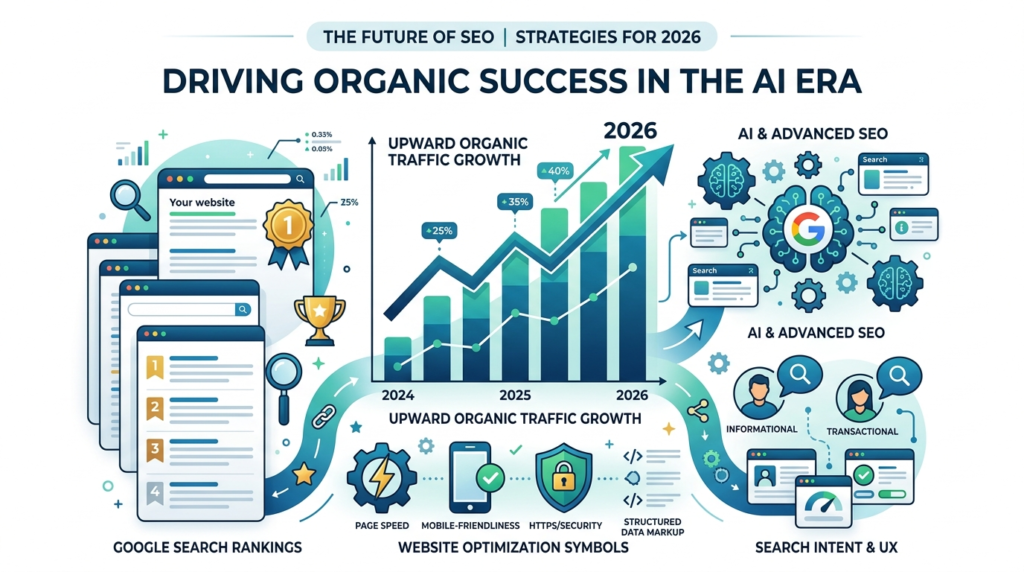
What Changed in SEO in 2026?
Quick Answer
SEO in 2026 focuses more on helpful content, AI search optimization, search intent, topical authority, and user trust instead of old-school keyword stuffing.
Google now prioritizes:
- Real experience
- Useful content
- User satisfaction
- Content depth
- Entity-based SEO
- AI Overview optimization
In simple words:
Google wants to rank content that genuinely helps users.
That means writing for humans first — algorithms second.
A strong SEO in 2026 for fast traffic strategy now depends on AI-friendly and helpful content
Why Old SEO Strategies Are Failing
A few years ago, ranking was easier.
People would:
- Add the same keyword 20 times
- Buy spam backlinks
- Write 500-word low-quality articles
- Copy competitor structures
And somehow rank.
Today?
That strategy can hurt your growth.
Google’s systems have become smarter at understanding:
- Context
- Expertise
- User intent
- Content quality
- Topic relationships
For example:
Imagine someone searches:
“Best SEO strategy for beginner bloggers in 2026”
Google understands that the searcher may want:
- Beginner-friendly advice
- Current SEO tactics
- AI search optimization
- Easy explanations
- Actionable steps
If your article only repeats “SEO strategy 2026” again and again, Google will likely ignore it.
Instead, comprehensive helpful content wins.
If you are new to SEO, first learn the basics because strong fundamentals still matter. Read this beginner-friendly guide:
SEO Basics for Beginners (2026):
1. Search Intent Is the Biggest Ranking Factor in 2026
Here is the truth many bloggers ignore:
You are not ranking for keywords anymore.
You are ranking for intent.
What Is Search Intent?
Search intent simply means:
Why someone searched something.
Example:
Keyword:
“Best AI SEO tools”
Possible intent:
- Compare tools
- Buy a tool
- Learn features
- Improve rankings faster
If your page does not match intent, rankings become difficult.
Types of Search Intent
Informational Intent
User wants information.
Examples:
- What is SEO?
- How does Google ranking work?
- SEO tips for bloggers
Commercial Intent
User is researching before purchase.
Examples:
- Best SEO tools
- Surfer SEO review
- Ahrefs vs Semrush
Transactional Intent
User wants action.
Examples:
- Buy SEO course
- Download SEO checklist
Navigational Intent
User already knows destination.
Examples:
- Google Search Console login
- Semrush homepage
Real Example
Let’s say you target:
“Fast SEO traffic”
Wrong content:
Talking only about technical SEO.
Better content:
Cover:
- Fast indexing
- AI-friendly content
- topical authority
- search intent
- EEAT
- content freshness
Because that is closer to what users actually want.
Pro Tip for Faster Rankings
Search your keyword manually.
Study:
- Top results
- FAQs
- People Also Ask
- AI Overview answers
Then create something more useful.
This one habit alone can massively improve rankings.
2. AI SEO Is Dominating Search in 2026
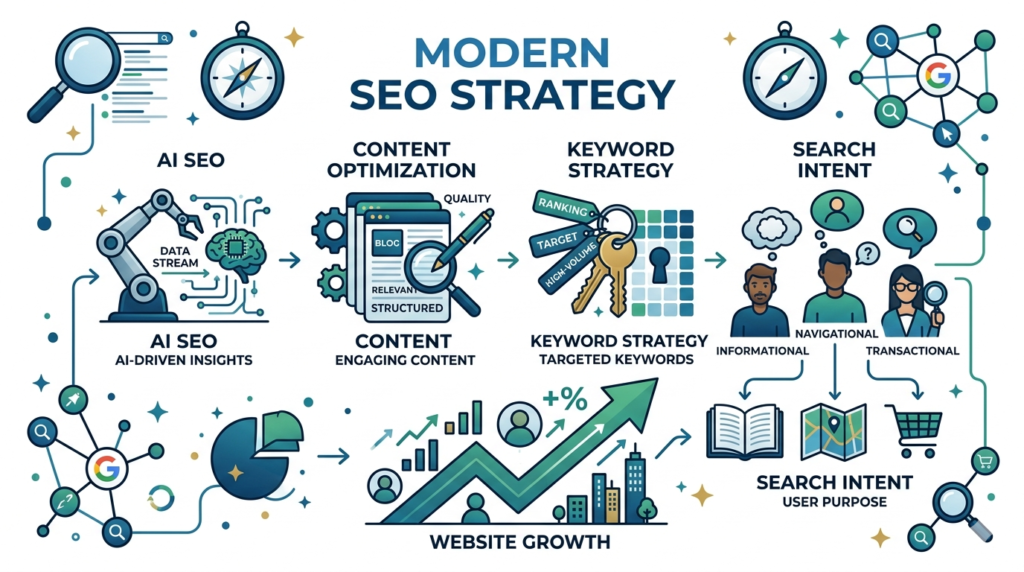
AI is changing SEO faster than most people expected.
Today, Google often generates summarized responses before users even click websites.
That sounds scary.
But smart bloggers are turning this into an opportunity.
What Is AI SEO?
AI SEO means optimizing content so AI-powered search systems can:
- Understand it quickly
- Cite it
- Recommend it
- Surface it in AI Overviews
Think of it like this:
Earlier you optimized for Google.
Now you optimize for:
Google + AI systems.
How to Optimize for AI Search
Write Clear Answers
Instead of long fluff, answer questions directly.
Bad:
“SEO has evolved significantly over time…”
Better:
SEO in 2026 works best when content satisfies search intent, demonstrates expertise, and answers questions clearly.
Simple wins.
Use Structured Headings
Good structure matters.
Use:
- H2
- H3
- H4
- bullets
- numbered steps
AI systems understand organized content better.
Add Context
Instead of writing:
“SEO tools help.”
Write:
“SEO tools help bloggers find keywords, improve on-page optimization, and monitor rankings.”
Specific content performs better.
If you want deeper understanding, this guide explains modern AI SEO strategies:
You should also understand how generative AI is changing search:
3. Topical Authority Is Beating Random Blogging
One of the biggest ranking shifts in 2026?
Topical authority.
Google trusts websites that deeply cover a niche.
For example:
Bad blogging strategy:
Write random posts about:
- Finance
- Gaming
- Health
- SEO
- Fashion
Good strategy:
Cover one topic deeply.
Example:
SEO website content:
- SEO basics
- Keyword research
- Technical SEO
- AI SEO
- Blogging SEO
- Internal linking
- Content optimization
Now Google sees expertise.
Why This Matters
Imagine two websites.
Website A:
One SEO article.
Website B:
50 helpful SEO articles.
Which feels more trustworthy?
Exactly.
Google thinks similarly.
Easy Topical Authority Formula
Choose:
1 niche → 5 categories → 50 supporting articles
Example for SEO:
Core topic:
SEO
Supporting categories:
- On-page SEO
- Technical SEO
- AI SEO
- Blogging SEO
- Keyword research
This creates authority faster.
For long-term traffic growth, evergreen SEO strategies matter too:
4. EEAT Matters More Than Ever
One reason many websites fail?
No trust.
Google wants signals showing:
Experience
Have you actually done it?
Example:
Bad:
“SEO works.”
Better:
“After testing article updates across multiple blogs, we noticed content refreshes improved impressions within weeks.”
Real examples feel authentic.
Expertise
Show knowledge.
Use:
- Examples
- Data
- Research
- Step-by-step breakdowns
Authority
Become known in your niche.
Ways:
- Publish consistently
- Earn mentions
- Build topical authority
Trust
This is huge.
Improve trust with:
- Clear information
- Author transparency
- Helpful writing
- Honest recommendations
In 2026, trust-driven content often beats over-optimized content.
5. Content Depth Wins (But Fluff Loses)
A common myth:
“Long content ranks automatically.”
No.
Helpful content ranks.
Sometimes 1,500 words wins.
Sometimes 4,000 words loses.
The difference?
Value.
Bad content:
Repeats same idea.
Good content:
Explains clearly.
Example:
Instead of saying:
“SEO matters for rankings”
Explain:
- Why SEO matters
- How SEO works
- What changed in 2026
- Mistakes to avoid
- Real examples
Depth matters.
Fluff does not.
Quick SEO Checklist for Fast Traffic in 2026
Before publishing, ask:
✅ Does this solve search intent?
✅ Is content human-friendly?
✅ Are headings organized?
✅ Did I answer questions clearly?
✅ Does content show expertise?
✅ Is it AI Overview-friendly?
✅ Did I add internal links?
✅ Is content easy to skim?
If yes, you are already ahead of many bloggers
6. Optimize for AI Overviews (This Is a Huge Traffic Opportunity)
One of the biggest SEO shifts in 2026 is the rise of AI-generated search summaries.
Many bloggers fear them.
But smart creators are optimizing for them.
What Are AI Overviews?
AI Overviews are search-generated summaries that answer user questions instantly.
The good news?
Google still pulls information from websites.
That means if your content is structured well, your site can become a source.
How to Optimize for AI Overviews
1. Answer Questions Clearly
Avoid unnecessary introductions.
Bad example:
“SEO has changed dramatically over the years…”
Better example:
SEO in 2026 works best when content satisfies search intent, builds trust, and answers questions clearly.
Simple, direct answers perform better.
2. Add Featured Snippet Style Sections
Use mini-answer blocks.
Example:
How Do You Get Fast SEO Traffic in 2026?
Quick Answer:
Focus on search intent, topical authority, AI-friendly formatting, internal linking, content freshness, and EEAT signals.
Short answers help search engines understand your content quickly.
3. Make Content Easy to Scan
Use:
- Bullet points
- Tables
- FAQs
- Short paragraphs
- Clear headings
Readers stay longer when content feels easy to consume.
7. Internal Linking Is Secretly a Traffic Multiplier
Many bloggers ignore internal links.
That is a mistake.
Internal links help:
- Google discover pages faster
- Improve crawlability
- Increase time on site
- Pass topical relevance
Think of your website like a city.
If roads are connected, movement becomes easier.
The same happens with SEO.
For beginners learning SEO foundations, you can naturally recommend:
Internal Linking Best Practices
Do this:
✔ Use natural anchor text
✔ Link related articles only
✔ Add links where readers need more context
✔ Keep topical relevance strong
Avoid:
❌ Random linking
❌ Overstuffing links
❌ Fake keyword-heavy anchors
8. Content Freshness Matters More Than Most Bloggers Think
A big reason traffic drops?
Outdated information.
SEO evolves quickly.
An article written in 2023 may not help users in 2026.
Google wants updated information for fast-changing topics.
How Often Should You Update Content?
For SEO topics:
- Every 3–6 months = ideal
- Major updates = whenever search trends shift
Update things like:
- Statistics
- Screenshots
- Search examples
- Tools
- Trends
- Headings
Even small updates can improve rankings.
Real Example
Imagine two articles:
Article A:
“SEO Tips for 2022”
Article B:
“SEO in 2026: What’s Working Right Now”
Which feels more useful?
Freshness creates trust.
For official guidance about helpful content and ranking systems, read Google’s documentation:
Google Search Central
9. Zero-Click Searches Are Growing — Here’s How to Survive
Many users now get answers without clicking.
This is called zero-click search.
Sounds scary?
Not always.
Because websites still win visibility when they become trusted sources.
How to Adapt
Become the Best Answer
Create:
- Better explanations
- Practical steps
- Clear summaries
- Real examples
Add FAQs
Search engines love FAQ-style sections.
Example:
Does SEO Still Work in 2026?
Yes. SEO still works in 2026, but success depends more on helpful content, search intent, trust signals, and AI-friendly formatting.
Build Brand Recognition
If readers trust your content, they click anyway.
People click trusted creators even when summaries exist.
10. User Experience (UX) Is Quietly Becoming a Ranking Superpower
You can write amazing content.
But if users leave quickly?
Rankings struggle.
Google watches engagement signals.
Bad experience includes:
- Huge walls of text
- Slow websites
- Spammy ads
- Hard-to-read design
Good experience includes:
- Short paragraphs
- Clear formatting
- Fast loading
- Helpful navigation
Simple UX Formula
Easy to read = longer time on page = better engagement
That matters.
11. Best SEO Strategies for Fast Traffic in 2026
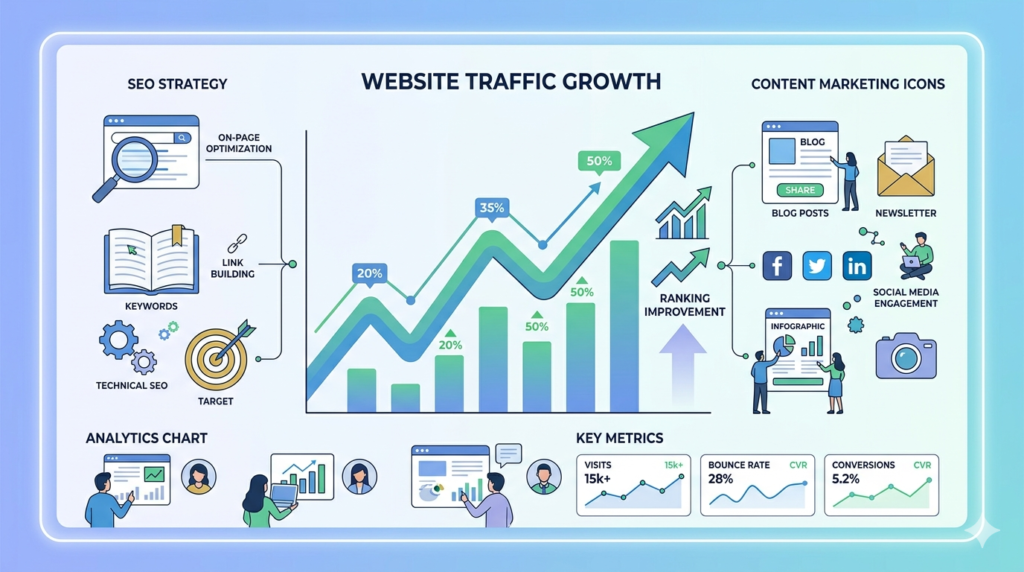
If your goal is traffic growth, focus here.
1. Target Low-Competition Keywords
Instead of:
“SEO”
Target:
- SEO for beginner bloggers
- SEO tips for affiliate blogs
- AI SEO strategy for niche sites
Long-tail keywords are easier to rank.
2. Publish Topic Clusters
Don’t write one random article.
Create connected content.
Example:
Main topic:
SEO in 2026
Supporting posts:
- SEO basics
- Keyword research
- Internal linking
- AI SEO
- Content optimization
This builds authority.
3. Refresh Old Posts
Often easier than creating new content.
Update:
- Headings
- Information
- Examples
- FAQs
4. Write for Humans First
Robotic content struggles.
Human content wins.
Use:
- Stories
- Examples
- Simplicity
- Clarity
5. Answer Questions Better Than Competitors
Study:
- Google suggestions
- People Also Ask
- Competitor gaps
Then improve.
For broader SEO research and trends, explore industry studies from:
Search Engine Journal
and
Ahrefs Blog
Common SEO Mistakes to Avoid in 2026
Many bloggers lose rankings because of avoidable mistakes.
Keyword Stuffing
Bad:
“SEO in 2026 SEO tips SEO ranking SEO traffic…”
Write naturally.
Publishing Thin Content
500 words with no depth rarely wins.
Ignoring Search Intent
Wrong intent = weak rankings.
Poor Internal Linking
Disconnected pages reduce authority.
Copying Competitors
Google rewards usefulness, not copies.
FAQs About SEO in 2026
Is SEO Still Worth It in 2026?
Yes. SEO remains one of the best long-term traffic strategies when combined with helpful content and AI-friendly optimization.
What Is the Biggest SEO Ranking Factor in 2026?
Search intent, helpful content, EEAT, topical authority, and user experience are among the strongest factors.
How Fast Can SEO Bring Traffic?
Some low-competition keywords may rank in weeks, while competitive topics can take months
Does AI Replace SEO?
No. AI changes SEO, but websites still need optimization to appear in search results and AI summaries.
Can Beginners Rank in 2026?
Yes. Beginners can rank faster by focusing on niche topics, long-tail keywords, helpful content, and smart internal linking
Final Thoughts: What Actually Works Right Now?
SEO in 2026 is not about tricks.
It is about usefulness.
The websites growing fastest are doing a few things consistently:
- Solving user problems
- Writing for humans first
- Matching search intent
- Building topical authority
- Optimizing for AI search
- Updating content regularly
- Creating trust
If you focus on those principles, fast traffic becomes much more realistic.
The future of SEO belongs to creators who help users better than everyone else.
The best SEO in 2026 for fast traffic approach is creating useful, trustworthy, and user-focused content.