
How to write blog content that ranks on Google is one of the biggest questions bloggers ask today. Many people publish articles regularly but struggle to get traffic, rankings, and clicks.
The Complete Beginner-to-Expert Guide for Writing Blog Posts That Get Traffic, Clicks, and Rankings
Have you ever spent hours writing a blog post only to realize that almost nobody reads it?
You publish the article, wait for traffic, refresh analytics again and again… and nothing happens.
Frustrating, right?
The truth is, writing a blog post is easy. Writing a blog post that actually ranks on Google is where the real challenge begins.
Many people think ranking on Google is about stuffing keywords everywhere or writing thousands of random words. But Google has changed a lot.
Today, ranking content is about helping real people, building trust, answering questions clearly, and creating genuinely useful content.
If you understand how Google thinks—and more importantly, what readers want—you can create blog posts that attract organic traffic consistently.
In this guide, you’ll learn exactly how to write blog content that ranks on Google, even if you’re a complete beginner.
Why Most Blog Content Never Ranks on Google
Before learning what works, it’s important to understand what fails.
Thousands of blog posts are published every minute. Most disappear without getting traffic because they make a few common mistakes.
Here are the biggest reasons blog content struggles to rank:
1. Writing for Search Engines Instead of Humans
Years ago, people ranked websites simply by repeating keywords again and again.
For example:
“Best blogging tips for blogging beginners who want blogging success.”
Sounds robotic, right?
Google is much smarter today.
Modern search algorithms understand meaning, context, and user intent. That means writing naturally matters more than keyword stuffing.
If readers enjoy your content, stay longer, and find answers quickly, Google notices.
2. Weak Content Structure
Imagine opening a blog post and seeing huge paragraphs with no headings.
Most readers immediately leave.
People skim content first.
That’s why successful blog posts use:
- Short paragraphs
- Clear headings
- Bullet points
- Tables when needed
- Visual examples
- FAQs
A clean structure improves both readability and SEO.
3. Ignoring Search Intent
This is one of the biggest reasons articles fail.
Search intent simply means:
Why is someone searching this keyword?
For example:
If someone searches:
“How to write blog content that ranks”
They want:
- Actionable steps
- SEO tips
- Writing strategies
- Real examples
They do NOT want:
- A history lesson about blogging.
Understanding intent helps you create content Google actually wants to rank
What Google Actually Wants in a Blog Post
A common misconception is that Google only cares about keywords.
Not true.
Google wants the best answer for a user’s question.
That means your content should be:
Helpful
Your article should solve problems clearly.
Ask yourself:
“Will readers leave this page feeling smarter or more confident?”
If yes, you’re moving in the right direction.
Trustworthy (EEAT Principle)
Google values experience and authority.
EEAT stands for:
- Experience
- Expertise
- Authoritativeness
- Trustworthiness
For example, if you’re teaching blogging, adding personal experience increases trust.
Instead of saying:
“SEO is important.”
You could write:
“When I optimized one of my blog posts for search intent and readability, organic traffic improved significantly over time.”
Real examples feel authentic.
Easy to Read
Google understands user behavior.
If people instantly leave your page, it sends negative signals.
That’s why readable content matters.
Simple improvements include:
- Short sentences
- Everyday language
- Conversational tone
- Proper spacing
Readers should feel like someone is explaining things to them—not lecturing them.
Step 1: Start With Keyword Research (The Smart Way)
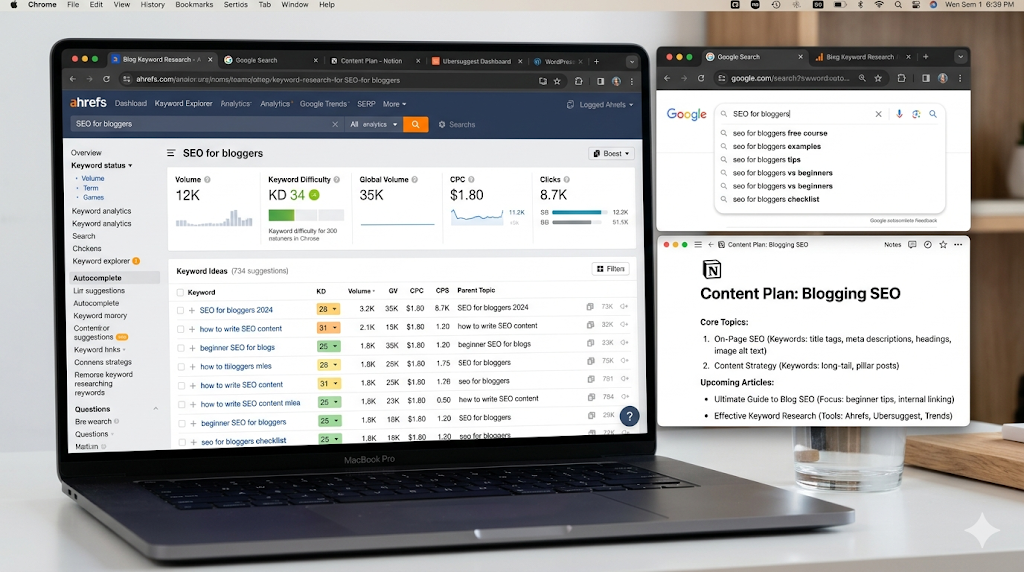
Before writing anything, you need a keyword.
But here’s the mistake beginners make:
They target impossible keywords.
For example:
“SEO”
This keyword is extremely competitive.
Instead, focus on long-tail keywords.
Example:
Instead of:
Blogging
Try:
How to write blog content that ranks on Google
Long-tail keywords are easier to rank for and often bring more targeted traffic.
Best Places to Find Blog Keywords
You don’t always need expensive SEO tools.
Here are beginner-friendly methods:
Google Autocomplete
Type your topic into Google.
You’ll see suggestions instantly.
Example:
Search:
“How to write blog…”
Google may suggest:
- How to write blog content
- How to write blog posts faster
- How to write SEO blog content
These suggestions come from real searches.
People Also Ask Section
Google literally tells you what users want.
Use those questions inside your article.
This improves featured snippet opportunities.
Example questions:
- How long should a blog post be?
- How do blogs rank on Google?
- What makes blog content SEO-friendly?
Competitor Research
Search your keyword.
Open top-ranking pages.
Observe:
- Heading structure
- Content depth
- FAQs
- Content formatting
Don’t copy.
Improve.
Ask:
“How can I make this more useful?”
That mindset changes everything.
If you’re new to optimization, this beginner SEO guide explains keyword research, rankings, and content optimization in simple terms.
Step 2: Understand Search Intent Before Writing
This is where good writers become great SEO writers.
Let’s simplify it.
There are four common search intents:
Informational Intent
People want knowledge.
Example:
“How to write blog content”
Your job:
Teach clearly.
Commercial Intent
People compare products.
Example:
“Best SEO tools for bloggers”
Your job:
Compare fairly.
Transactional Intent
People want to buy.
Example:
“Buy Grammarly Premium”
Your content should support purchase decisions
Navigational Intent
People want a specific page.
Example:
“YouTube Studio Login”
Different keywords need different writing styles.
If intent mismatches, rankings struggle.
Step 3: Create an SEO-Friendly Blog Structure
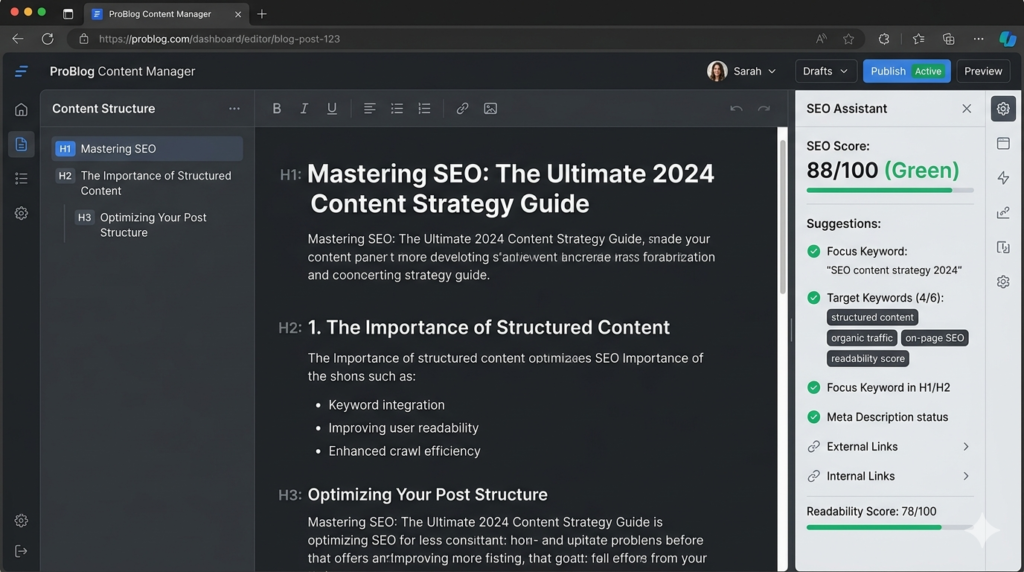
Think of blog structure like architecture.
Even amazing information looks messy without organization.
Here’s a simple ranking structure:
Title (H1)
Create a title that combines:
- Keyword
- Curiosity
- Benefit
Example:
How to Write Blog Content That Actually Ranks on Google (Complete Guide)
Good titles improve click-through rates.
Introduction
Your intro should:
- Hook readers
- Mention the problem
- Promise a solution
Example formula:
Problem → Emotion → Solution
Like this:
Struggling to get traffic even after writing blog posts? You’re not alone. In this guide, you’ll learn exactly how to create blog content that Google actually wants to rank.
Simple.
Effective.
H2 & H3 Headings
Use headings logically.
Example structure:
Why Blogs Fail to Rank
Keyword Research Basics
Understanding Search Intent
On-Page SEO Tips
Common Blogging Mistakes
FAQs
This improves readability and SEO.
Step 4: Write for Humans First, SEO Second
Here’s a truth many bloggers learn late:
If readers hate your content, Google won’t love it either.
Instead of sounding robotic:
❌ “SEO blog writing improves keyword optimization metrics.”
Write naturally:
✅ “Good SEO writing helps your content become easier to discover on Google.”
See the difference?
One sounds like a textbook.
The other sounds human.
Use Conversational Writing
Pretend you’re helping a friend.
Write like you’re speaking.
Ask questions.
Use examples.
Keep the tone natural.
Example:
Ever clicked on a blog post and left after 10 seconds because it felt boring? Your readers feel the same way.
That keeps attention.
Use Short Paragraphs
Large text blocks feel overwhelming.
Especially on mobile devices.
Instead of writing 8–10 lines together:
Keep paragraphs short.
Usually:
2–4 lines max.
This small trick dramatically improves readability
Step 5: Naturally Add Keywords (Without Stuffing)
Many bloggers still make this mistake.
They repeat keywords excessively.
Example:
“Blog content ranking blog content on Google blog ranking tips for content…”
Painful to read.
Instead:
Use keywords naturally.
Primary keyword:
How to write blog content that ranks
Related LSI keywords:
- SEO blog writing
- Google ranking tips
- Blog SEO strategy
- Content optimization
- Search intent writing
- Organic traffic growth
- Blogging tips for beginners
Spread them naturally through headings and paragraphs.
A good rule:
Write naturally first.
Optimize later.
Step 6: Optimize for Featured Snippets
Want extra traffic?
Target Google featured snippets.
These appear at the top of search results.
Example format:
What Is SEO Blog Writing?
SEO blog writing is the process of creating content optimized for search engines while remaining useful and engaging for readers. It includes keyword research, search intent optimization, readability improvements, and content structuring.
Notice what happened?
- Direct answer
- Simple language
- Short paragraph
Google loves clarity.
Step 7: Write Headlines That Make People Click
Even the best blog post can fail if nobody clicks it.
Think about it.
If your title feels boring, readers scroll past it.
That’s why headlines matter for SEO and click-through rates (CTR).
A strong headline usually includes:
- A clear benefit
- A keyword
- Curiosity
- Emotional appeal
Compare these:
❌ Blog Writing Tips
✅ How to Write Blog Content That Actually Ranks on Google (Step-by-Step Guide)
The second title feels more useful and specific.
A Simple Formula for Better Headlines
Try this structure:
Keyword + Benefit + Curiosity
Examples:
- How to Write SEO Blog Posts That Rank Faster
- Blog Writing Secrets That Can Improve Google Rankings
- 10 Proven Ways to Write Blog Content People Actually Read
Clear beats clever.
Always.
Step 8: Improve On-Page SEO Without Sounding Robotic
On-page SEO helps Google understand your content.
But many bloggers overdo it.
The goal is optimization without ruining readability.
Here’s what matters most:
Use Keywords in Important Places
Include your primary keyword naturally in:
- Title (H1)
- Introduction
- At least one H2 heading
- Meta description
- Image alt text
- URL slug
Example URL:
yourwebsite.com/write-blog-content-that-ranks
Clean URLs work better.
Avoid:
yourwebsite.com/post123?id=blog-content-seo-guide
Messy URLs confuse users and search engines.
Optimize Readability
Google pays attention to user experience.
If people struggle to read your blog, rankings can suffer.
Keep content readable with:
- Short paragraphs
- Simple language
- Bullet points
- Subheadings
- Examples
Remember:
Easy-to-read content usually performs better.
Step 9: Add Internal Links Strategically
Internal linking is underrated.
It helps readers discover more content and helps search engines understand your website structure.
For example:
If you mention SEO basics, you can link to another relevant blog post.
Example:
If you’re new to SEO, read our beginner guide on keyword research.
This creates topical relevance.
But don’t overdo it.
A good rule:
Add internal links only when relevant.
Think quality, not quantity.
Why Internal Linking Matters
Benefits include:
- Better crawlability
- More page views
- Longer session duration
- Improved topical authority
In simple words:
Google better understands your website.
Step 10: Use External Links to Build Trust
Many bloggers avoid linking to outside websites because they think traffic will disappear.
That’s a mistake.
Linking to trustworthy sources increases credibility.
For example:
When discussing SEO trends, statistics, or studies, cite respected sources.
Good external references may include:
- Industry research
- Official documentation
- Expert studies
It signals trust.
And trust matters for rankings.
Understanding SEO best practices for external links can improve trust signals and strengthen topical relevance
Step 11: Improve EEAT Signals (The Secret Behind High-Trust Content)
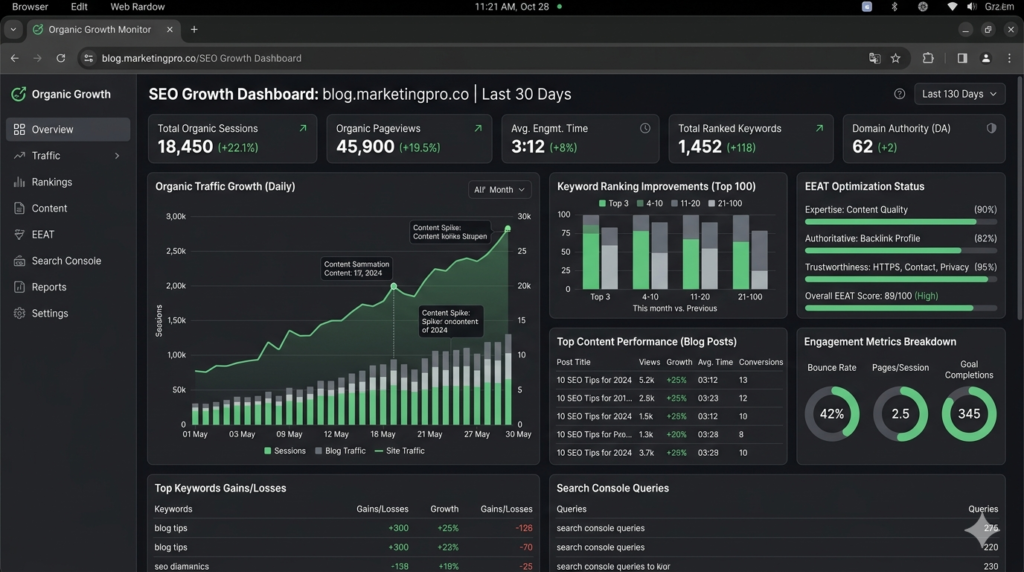
Earlier we discussed EEAT.
Now let’s go deeper.
Google rewards content that feels reliable.
E – Experience
Share practical examples.
Instead of saying:
“SEO content works.”
Say:
“After restructuring older blog posts with better headings and search intent optimization, organic visibility improved over time.”
Real experiences build confidence.
E – Expertise
Demonstrate knowledge.
Explain topics clearly.
Use examples.
Break down difficult concepts.
Readers should think:
“This person knows what they’re talking about.”
A – Authoritativeness
Build authority by:
- Publishing quality content consistently
- Covering topics deeply
- Creating topic clusters
For example:
If your website focuses on blogging:
Write related content like:
- Blogging mistakes
- SEO writing tips
- Affiliate blogging
- Keyword research guides
This strengthens niche authority.
T – Trustworthiness
Trust improves rankings.
You can improve trust with:
- Accurate information
- Clear explanations
- Honest recommendations
- Updated content
Trust is one of the biggest ranking factors people ignore.
Step 12: Add Real-Life Examples and Stories
People remember stories.
Nobody remembers robotic paragraphs.
Imagine this:
A beginner blogger writes 50 articles with random keywords.
No traffic.
Then they learn keyword intent, structure, and readability.
Suddenly, rankings improve.
Which explanation feels more engaging?
The story.
Stories make content feel human.
And human content performs better.
Step 13: Optimize Images for SEO
Many bloggers upload images carelessly.
Huge mistake.
Images can improve rankings and engagement.
Best practices:
Compress Images
Large images slow websites.
Slow websites hurt user experience.
Fast-loading pages perform better.
Use Descriptive File Names
Bad example:
IMG123.jpg
Better example:
how-to-write-seo-blog-content.jpg
Add Alt Text
Alt text helps search engines understand images.
Example:
“Example of SEO blog writing structure”
Simple but useful.
Step 14: Keep Readers Engaged Longer
Engagement matters.
If users leave quickly, rankings may struggle.
Ways to improve engagement:
Ask Questions
Example:
Have you ever published a blog post that got zero traffic?
Questions create connection.
Use Examples
Examples simplify learning.
Break Long Sections
Readers skim.
Don’t overwhelm them.
Add Lists
People love scannable information.
Example:
Signs Your Blog Content Needs Improvement:
- Low traffic
- High bounce rate
- Poor readability
- Weak headlines
- No keyword strategy
Simple formatting improves retention.
If you want faster visibility while building long-term SEO, exploring proven ways to get instant website traffic can help bring more attention to your content.
Common Mistakes Bloggers Make (And How to Avoid Them)
Even good writers make SEO mistakes.
Avoid these common problems:
Keyword Stuffing
Bad:
“SEO blog content SEO blog writing Google ranking content…”
Write naturally instead.
Ignoring Search Intent
If readers want answers and you give fluff, rankings suffer.
Writing Huge Paragraphs
Walls of text scare readers.
Keep spacing clean.
No Structure
Without headings, content feels messy.
Copying Competitors
Research competitors.
Don’t duplicate them.
Improve the experience.
Quick SEO Blog Writing Checklist
Before publishing, ask yourself:
✅ Is the title compelling?
✅ Did I target the correct keyword?
✅ Is search intent satisfied?
✅ Are paragraphs short?
✅ Did I add headings?
✅ Are keywords natural?
✅ Did I include internal links?
✅ Is content easy to scan?
✅ Did I optimize images?
✅ Does it genuinely help readers?
If yes, you’re ahead of most bloggers
Frequently Asked Questions (FAQs)
How Long Should a Blog Post Be to Rank on Google?
There’s no perfect number.
But long-form, high-quality content often performs better when it fully solves a topic.
For competitive keywords, articles between 1,500–3,000 words are common.
Quality matters more than word count.
How Often Should I Publish Blog Content?
Consistency matters more than speed.
Publishing valuable content consistently works better than posting low-quality articles daily.
Can Beginners Rank on Google?
Yes.
Many beginners rank by targeting low-competition keywords, focusing on search intent, and writing useful content.
Does AI Content Rank on Google?
AI-assisted content can rank if it is genuinely useful, human-edited, trustworthy, and valuable.
Google rewards quality—not whether humans or tools helped write it.
If you’re experimenting with AI tools for content creation, you may also wonder: Can Gemini AI really rank your blog and help improve search visibility?
Final Thoughts: Write for People, Optimize for Google
If there’s one thing to remember, remember this:
Google ranks content that genuinely helps people.
Instead of obsessing over tricks or hacks, focus on creating useful, easy-to-read, trustworthy content.
If your goal is long-term organic growth, learning how to increase website traffic can help you understand what actually drives visitors to a blog over time.
Do proper keyword research.
Understand search intent.
Write naturally.
Optimize smartly.
And most importantly:
Stay consistent.
The first few articles may not rank immediately
That’s normal.
But when you keep improving your writing, structure, and SEO strategy, results compound over time.
One well-written article can bring traffic for years.
So the next time you write a blog post, ask yourself:
“Would I actually enjoy reading this?”
If the answer is yes, you’re already closer to ranking on Google.