
introduction
Are you looking to learn SEO Basics for Beginners 2026 and rank your blog on Google? If yes, you are in the right place. In this guide, you will learn how SEO works and how to rank your blog step-by-step.
Are you interested in becoming a profitable blogger? Do you want your website to rank on Google? If yes, then it is very important for you to understand what SEO is and why it matters. Learning SEO will help you properly optimize your blog and increase your chances of getting more traffic from search engines.
Did you know that Google publishes nearly 4 million blog posts every single day? Out of these, only about 10% manage to appear in search results, and just around 1% reach the first page of Google. This clearly shows that competition is very high, but it is definitely not impossible to succeed.
If you combine consistent effort with smart strategies, the process becomes much easier. But the question is — how can you do it? In this post, I will share some important SEO insights that you may not find elsewhere. This knowledge is based on my personal experience.
In this article, we will cover everything you need to know about SEO, including what SEO is, how to do it properly, on-page SEO, off-page SEO, technical SEO, keyword research, and much more. That’s why it’s important to read and understand each section carefully.
So, let’s get started by understanding what SEO actually is.
If you are completely new to blogging, you can also check this complete beginner guide on AI blogging basics
What is seo
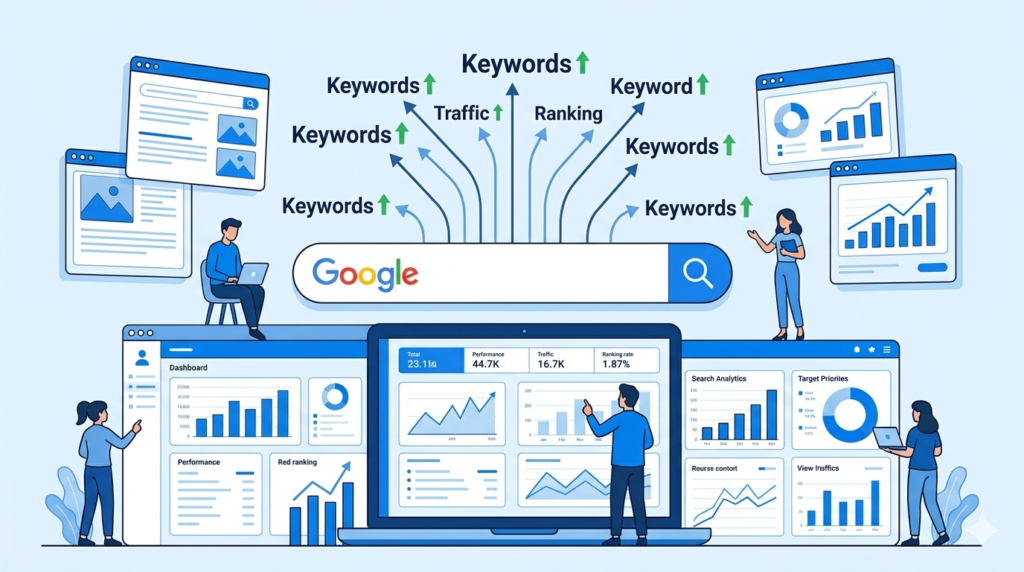
SEO, or Search Engine Optimization, refers to a combination of more than 200 ranking factors that Google uses to decide how websites appear in search results. In simple terms, these factors help Google determine which content should rank at the top and which should appear lower in the list.
So, what exactly does SEO mean? SEO stands for “Search Engine Optimization.” Many people think SEO is only about ranking on Google, but that’s not true. If you properly optimize your content, it can rank on multiple search engines, not just Google.
In fact, your content can appear on around 15 different search engines, including Yandex, Yahoo, Bing, and others. While these platforms may not bring as much traffic as Google, they can still drive valuable visitors to your website.
Still confused about what SEO really is? Let’s understand it with a simple example.
Suppose you search for “SEO tips by Pawan Agarwal” on Google. After you hit search, Google shows a list of results. The website that appears at the top has most likely done a great job optimizing its content for search engines.
Because of this strong optimization, Google ranks that content higher when someone searches for that keyword. By now, you probably have a better understanding of SEO. And if it’s still not completely clear, don’t worry—everything will start to make more sense as you continue learning more about SEO.
To understand SEO directly from Google, you can read the official Google SEO Starter Guide here:
To understand how modern technology like AI is changing SEO, you can read this guide on what is AI in 2026
Why Is SEO Important for Blogging and Making Money Online?

Do you think you could pass an exam without preparation? Probably not. In the same way, if you want your website or blog to appear in search results, SEO is essential. Google uses more than 200 ranking factors to decide which blog posts should appear at the top and which should rank lower in search results.
Google mainly ranks content based on how relevant and helpful it is for a user’s search query. This means it’s not enough to simply write about a topic—you need to present your content in a way that search engines can understand and value.
The good news is that learning SEO is not as difficult as it may seem. You just need to focus on a few important factors while creating your content, which I will explain later. Once you understand SEO, you won’t just be able to rank your own blog, but you can also help others improve their rankings.
That’s why it is very important to understand the true value of SEO (Search Engine Optimization). Most people use Google to find answers to their questions. If your blog appears at the top of search results, the chances of getting clicks can increase by up to 31.7%.
SEO is the key factor behind organic search results. Search engines use SEO to decide which content provides the most useful and satisfying answers to users. When your blog consistently appears at the top, people begin to see it as a trustworthy and authoritative source.
Even if your website ranks second for a keyword, there is still a strong chance that users will click on it. If your content ranks well on Google, people may start sharing it on social media platforms like Facebook, Twitter, and Instagram. This helps you reach a wider audience and grow your traffic.
It’s clear that ranking higher on Google can significantly boost your website traffic. If you have a well-optimized, SEO-friendly blog post about a product, visitors are more likely to get interested and eventually make a purchase
Types of SEO
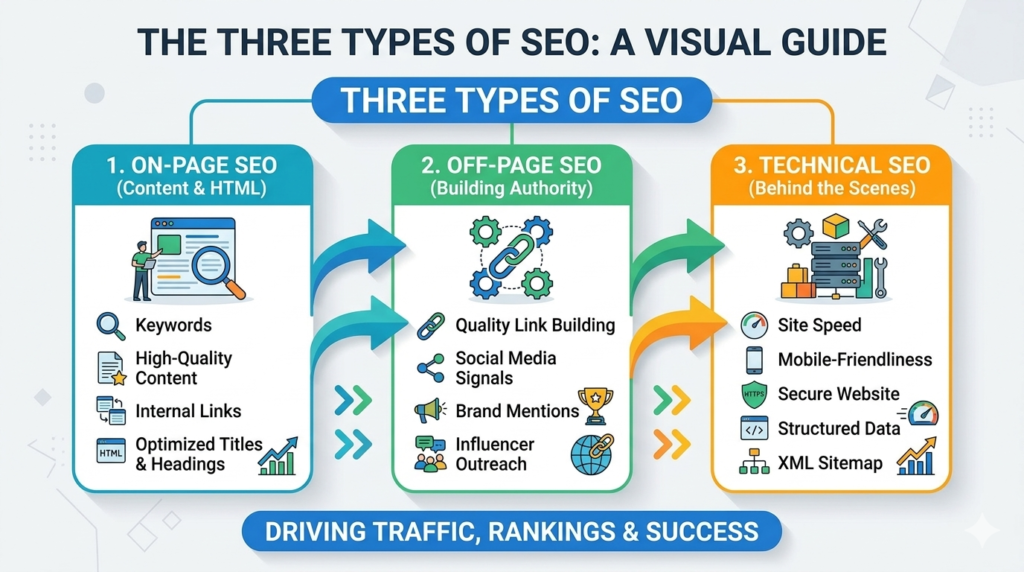
Do you think that On-Page SEO and Off-Page SEO are the only two types of SEO? In a way, this belief is both correct and incorrect—and here’s why.
Around seven or eight years ago, SEO was mainly divided into two categories: On-Page SEO and Off-Page SEO. However, as Google continuously improved and updated its algorithms, new aspects of SEO started becoming more important.
Today, SEO is generally divided into three main types:
- On-Page SEO
- Off-Page SEO
- Technical SEO
Even now, many people still believe that there are only two types of SEO. Some are aware of Technical SEO, but they don’t consider it as a separate category. However, this is a misconception.
While On-Page and Off-Page SEO are very important, Technical SEO plays a crucial role in achieving top rankings on Google. Without a strong technical foundation, it becomes difficult for any website to perform well in search results.
That’s why Technical SEO is an essential part of overall website optimization. Now, let’s start by understanding what On-Page SEO is and how it works.
On-Page SEO
On-Page SEO (Search Engine Optimization) refers to the process of optimizing individual web pages to improve their rankings in search engines and increase organic traffic. Unlike Off-Page SEO, which depends on external factors like backlinks, On-Page SEO focuses on elements that you can directly control on your website.
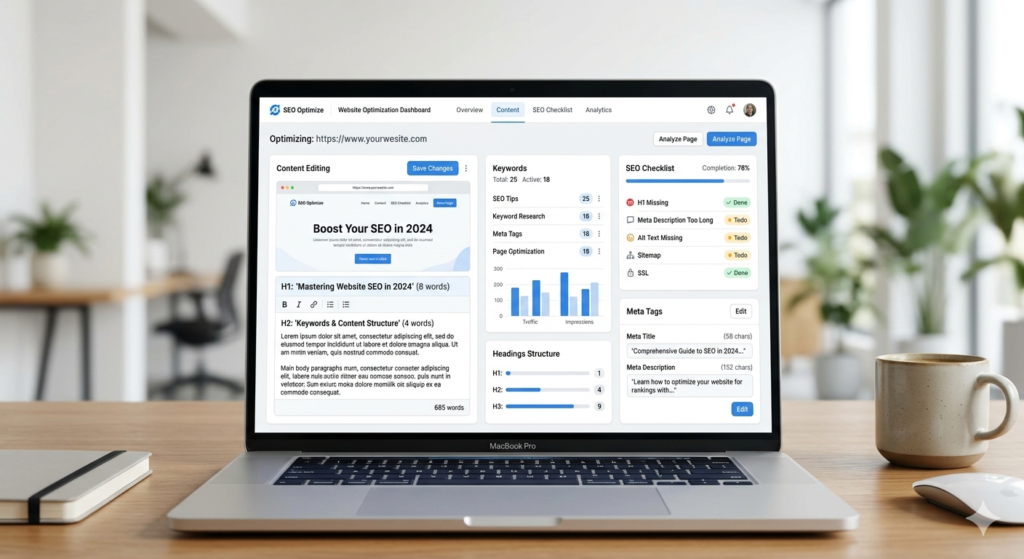
These include content quality, HTML elements, website structure, and overall user experience. To achieve strong On-Page SEO, you need to pay attention to several important factors.
Content quality is one of the most important elements. Your content should be original, informative, and valuable. It must satisfy the user’s search intent because search engines always prioritize content that is useful and relevant to users.
Title tags are HTML elements that define the title of a webpage and appear as the clickable headline in search engine results. They should be clear, concise, and include your main keyword to accurately describe the page content.
Meta descriptions provide a short summary of your webpage in search results. Although they are not a direct ranking factor, they play an important role in improving your click-through rate by attracting users to your content.
Headings and subheadings (H1, H2, H3, etc.) help organize your content properly. The H1 tag is usually used for the main title, while H2 and H3 tags are used for subtopics. This structure makes it easier for both readers and search engines to understand your content.
URL structure also matters. Clean, short, and descriptive URLs make it easier for users and search engines to understand what the page is about. Using keywords and separating words with hyphens improves readability.
Keyword optimization is another key factor. You should research relevant keywords and use them naturally in your content. Avoid keyword stuffing and focus more on long-tail keywords for better targeting.
Content freshness is important as well. Regularly updating your content signals to search engines that your website is active and relevant. Updates should add real value rather than just making small changes.
Internal linking helps connect different pages on your website. It improves site structure, helps search engines crawl your site more effectively, and enhances user experience by guiding visitors to related content.
Image optimization is also essential. Images should be compressed to improve loading speed, and you should use descriptive file names and alt text with relevant keywords.
Mobile responsiveness is crucial because search engines use mobile-first indexing. Your website must be fully optimized for mobile devices to perform well in search rankings.
Page load speed directly affects both user experience and SEO. Faster-loading pages keep users engaged and allow search engines to index your content more efficiently.
Schema markup (structured data) helps search engines better understand your content. It can improve your visibility in search results by enabling rich snippets.
Content structure and readability play a major role in user experience. Use short paragraphs, bullet points, and highlighted text to make your content easy to read and understand.
Social sharing buttons can help your content reach a wider audience. While social signals are not direct ranking factors, more shares can lead to more backlinks and increased visibility.
Having a secure website (HTTPS) is also important, as search engines consider security as a ranking factor.
User engagement metrics such as time on site, bounce rate, and pages per session indirectly impact SEO. They indicate how useful and engaging your content is for visitors.
In conclusion, successful On-Page SEO requires a balanced approach that includes high-quality content, proper optimization, and a great user experience. The goal is to make your content valuable, easy to understand, and accessible for both users and search engines.
When all these elements work together, they create strong On-Page SEO that improves your content’s visibility and ranking in search engine results.
If you struggle to find blog topics, this guide will help you discover AI-based blog ideas easily
What Is Off-Page SEO?
Off-Page SEO refers to all the strategies and actions performed outside your website to improve its search engine rankings and overall visibility. Unlike On-Page SEO, which focuses on optimizing your website’s content and structure, Off-Page SEO is mainly about building your website’s authority, trust, and credibility in the eyes of search engines.

One of the most important elements of Off-Page SEO is backlinks. Backlinks are links from other websites that point to your site. High-quality and relevant backlinks act as a signal to search engines that your content is valuable and trustworthy, which can significantly improve your rankings.
Link building is the process of acquiring these backlinks from reputable websites. This can be done through methods such as guest posting, influencer outreach, and broken link building.
Social signals also play a role in Off-Page SEO. Activities like likes, shares, and comments on social media platforms can increase your content’s visibility and indirectly drive more traffic to your website.
Content marketing is another key factor. Creating high-quality, shareable content encourages other websites to link back to you naturally, which strengthens your site’s authority.
Online reputation management is equally important. It involves monitoring your brand’s presence online, responding to reviews, managing mentions, and handling negative feedback professionally.
Local SEO is essential for businesses with physical locations. Optimizing your business listings and building local citations helps improve visibility in local search results.
Brand mentions—when your website or brand is mentioned online, even without a direct link—can still contribute to your website’s authority and trustworthiness.
Participating in forums and online communities related to your niche can also help. By providing valuable insights and engaging with users, you can drive traffic and build credibility.
Social bookmarking is another useful technique. Sharing your content on bookmarking sites can increase its reach and sometimes generate backlinks.
Guest blogging involves writing high-quality articles for other websites in your niche and including a backlink to your own site. This not only builds backlinks but also increases your exposure.
Influencer outreach means collaborating with influencers who can promote your content, helping you gain more visibility, traffic, and potential backlinks.
Press releases are also helpful. Sharing newsworthy updates about your business can get your content featured on news websites and blogs.
In conclusion, Off-Page SEO is crucial for building your website’s authority and trust in the eyes of search engines. While it takes time and consistent effort, a strong Off-Page SEO strategy can significantly improve your search rankings and drive long-term organic traffic
What Is Technical SEO?
A subset of search engine optimization (SEO) known as “technical SEO” concentrates on improving a website’s technical features to raise its search engine rankings. To make the website easier for search engines to crawl, index, and comprehend, it entails improving its structure, functionality, and coding.
Because search engines like Google utilize sophisticated algorithms to crawl, index, and rank web pages, technical SEO is crucial. It is easier for search engines to comprehend material and present it to the appropriate users in search results when a website is technically optimized.
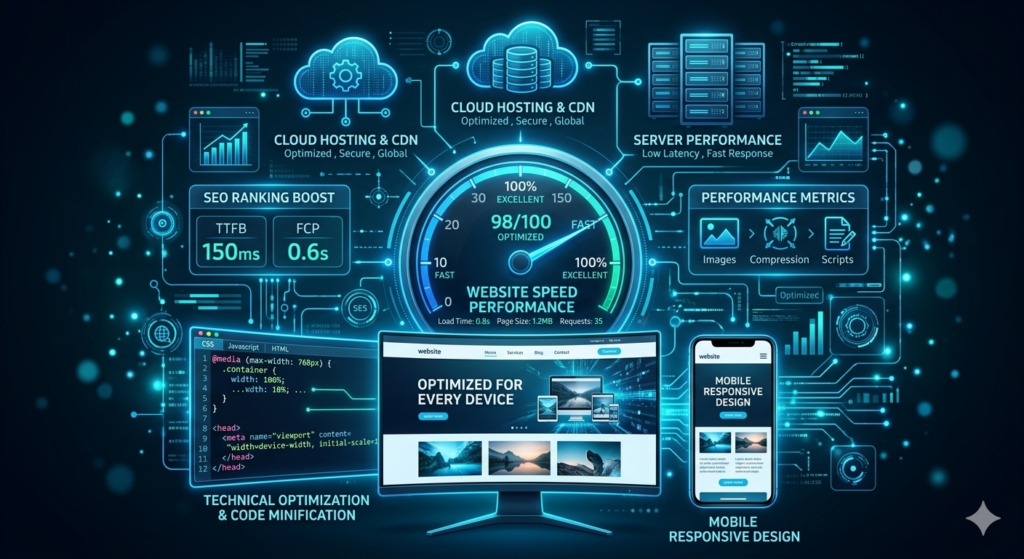
To put it simply, technical SEO makes sure that your website functions properly for both users and search engines. In the end, it helps your content appear better in search engine results pages (SERPs) by enhancing website speed, mobile friendliness, site structure, security, and overall performance.
Here are some important factors and considerations for Technical SEO:
Site Speed: One of the most crucial aspects of SEO is the speed at which pages load. Search engine rankings and user experience can both suffer from a sluggish website. Reducing HTTP requests, enabling browser caching, and compressing images can all speed up your website.
Mobile Optimization: Google prioritizes mobile-friendly websites due to the growing usage of mobile devices. Make sure your website works well on mobile devices and is responsive.
HTTPS (SSL Certificate): Adding an SSL certificate to your website, which modifies the URL to “https://,” is crucial for security as well as ranking. Using HTTPS to safeguard your website is regarded as a best practice.
XML Sitemap: Make an XML sitemap and send it to search engines. This makes it easier for search engines to find and index your material.
Robots.txt: You may manage which sections of your website search engine bots are permitted to crawl and which ones they should avoid by using the robots.txt file. This aids in controlling search engine access to your content.
Canonicalization: When comparable content appears on several URLs, use canonical tags to indicate the preferred version of a URL and prevent duplicate content problems.
URL Structure: Ensure that your URLs are clear, informative, and contain pertinent keywords. Steer clear of complicated dynamic URLs with superfluous query parameters.
Schema Markup: Use schema markup to incorporate structured data and give search engines more details about your content. This may help your pages show up in search results with rich snippets.
Mobile-Friendly Design: Make use of responsive web design to ensure that your website functions and looks well across all screen sizes and devices.
Make sure your website pages are easily crawled and indexed by search engine bots. Steer clear of unneeded noindex tags, blocked resources, and other technical obstacles.
404 Errors and Broken Links: Check your website frequently for 404 errors and broken links. If left unchecked, these can negatively impact both SEO and user experience.
Page Speed Optimization: Reduce server response time, use browser caching, and optimize pictures to speed up page loading.
Structured Data: By using structured data (like Schema.org), you may enhance your appearance in search results with rich snippets and help search engines better understand your content.
Google now primarily uses a website’s mobile version for indexing and ranking, so make sure your website is optimized for mobile-first indexing.
Website Security: Protect your website against malware and hacking. Use secure passwords, update your software frequently, and think about implementing security measures like a Web Application Firewall (WAF).
Technical SEO is a continuous endeavor. Maintaining and enhancing your website’s search engine rankings and user experience requires regular monitoring and improvement of these technological components.
What is Local SEO and How is it Done?
The goal of local SEO, a subset of search engine optimization (SEO), is to make a company more visible in local search results. For companies that operate in a certain region, it is particularly crucial.
firms that serve clients in a particular area, such as physical storefronts, service-area firms, or any company that offers services within a certain city or region, would find local SEO especially helpful. Businesses may make it simpler for local consumers to locate them when they search online for relevant goods or services by optimizing for local search.
You can optimize your business for Local SEO in the following ways:
Optimize your Google My Business (GMB) listing by first claiming and confirming it. Make sure your NAP (Name, Address, and Phone Number) information is correct, current, and consistent. Provide a thorough description of your company, select the appropriate categories, specify your working hours, enumerate the goods or services you provide, and attach crisp images.
Use local terms, such “near me” or the name of your city or region, to demonstrate your local focus. Incorporate these keywords organically into the content, meta tags, and alt text of your images on your website.
On page local seo
Make sure your location and service region are prominently shown on your website. Make distinct local landing pages if you have various locations or service different areas. Incorporate local keywords into your headers, meta descriptions, and title tags.
Local link building
Add your company on citation websites and local business directories. Develop connections with other nearby companies and seek for chances to obtain local backlinks. You can also get mentions and links from their websites by taking part in or supporting neighborhood events.
Local link building
Add your company on citation websites and local business directories. Develop connections with other nearby companies and seek for chances to obtain local backlinks. You can also get mentions and links from their websites by taking part in or supporting neighborhood events.
Review and rantings
Encourage your clients to post evaluations on other review sites and on your Google My Business profile. Whether a review is positive or negative, respond to it in a professional manner. Additionally, you might emphasize client endorsements on your website.
Local contect creation
Write blog entries about local events, news, or activities that are pertinent to your community. Additionally, you might highlight case studies or anecdotes from nearby clients.
Mobail optimization
A significant percentage of local searches are conducted on mobile devices, so make sure your website is mobile-friendly. Boost the user experience and speed of mobile websites.
Structure data markup
For local businesses, use Schema.org markup to give search engines comprehensive details about your company. Add your address, phone number, business hours, reviews, and other pertinent information.
Social media presence
Maintain an active presence on the social media platforms where your local customers are most active. Share local content and interact with the community to build trust and engagement
Monitoring Local SEO Performance:
Make use of tools that let you monitor location-based local rankings. To find out how your company is doing, keep an eye on the traffic coming from Google My Business and other local listings.
Optimize for Voice Search:
Make sure your content is optimized for conversational terms and phrases that are more likely to be found in voice searches. Give concise responses to frequently asked questions about your company.
Local Business Schema (JSON-LD):
Use Local Business Schema on your website to help search engines comprehend details about your company, including reviews, prices, and the services you provide.
The process of local SEO is continuous. Long-term success depends on maintaining accurate and current information, regularly updating local listings and profiles, and consistently optimizing your website for local search. Businesses may increase their exposure in local search results, draw in more visitors, and attract more local clients by concentrating on these elements.
This SEO Basics for Beginners 2026 guide will help you understand how search engines work and how you can rank your blog on Google step by step. If you follow the right strategies, learning SEO Basics for Beginners 2026 becomes much easier, even for complete beginners.
In this article, we have explained SEO Basics for Beginners 2026 in a simple and practical way so that you can apply these techniques on your blog and start getting organic traffic. By implementing these tips from SEO Basics for Beginners 2026, you can improve your website’s visibility and grow your online presence.
Conclusion

SEO (Search Engine Optimization) is the backbone of successful blogging and making money online. Without proper SEO, even high-quality content may fail to reach the right audience. By understanding and applying the three main types of SEO—On-Page, Off-Page, and Technical SEO—you can significantly improve your website’s visibility in search engine results.
It’s important to remember that SEO is not a one-time task but an ongoing process. You need to consistently update your content, optimize your website, and build authority over time. With the right strategy, patience, and continuous learning, you can achieve higher rankings and drive consistent organic traffic to your blog.
If you focus on providing real value to your audience while following SEO best practices, success will naturally follow. Over time, this can help you build a strong online presence, grow your audience, and increase your income through blogging.
You should also learn modern digital skills to stay ahead, check this list of top AI skills for students in 2026