

The best AI tools bloggers are using in 2026 are helping creators write faster, improve SEO, generate content ideas, and grow websites more efficiently. Instead of spending hours on research, editing, and optimization, bloggers now use AI tools to simplify workflows and create high-quality content faster.
Blogging in 2026 looks very different from what it was a few years ago.
Many bloggers are no longer spending 10 hours writing a single post, struggling with SEO optimization, or manually researching every topic. Instead, smart bloggers are using AI tools to speed up content creation, improve quality, and grow traffic faster.
But here is the truth most people do not talk about.
AI is not replacing bloggers.
It is helping bloggers work smarter.
The best bloggers today use AI to brainstorm content ideas, improve SEO, research keywords, optimize readability, generate outlines, and even create images. However, successful blogs still need a human touch, real experience, storytelling, and strategic thinking.
If you are wondering which tools are actually worth using, this guide covers the 7 best AI tools bloggers are using in 2026 and how they can help you save time while improving content quality.
Whether you are a beginner or experienced blogger, these tools can seriously improve your workflow.
Why Bloggers Are Using AI Tools in 2026
Before jumping into the tools, it helps to understand why AI has become such an important part of blogging.
Here are a few major reasons:
Faster Content Creation
Writing high-quality blog posts takes time.
From keyword research to outlining, editing, SEO optimization, and formatting, a single article can take hours. AI tools help reduce repetitive work so bloggers can focus more on creativity and strategy.
Better SEO Optimization
Modern blogging is not just about writing.
Ranking on search engines requires keyword optimization, readability, content structure, intent matching, and EEAT-focused writing. AI tools now help bloggers improve these areas much faster.
For example, many creators exploring productivity software also check guides on best AI tools for blogging and content workflows to improve content strategy naturally.
Smarter Content Research
Instead of spending hours searching for ideas manually, bloggers now use AI to discover trends, summarize information, and organize research quickly.
If your audience includes students, creators, or beginners learning productivity tools, it also helps to explore AI-powered resources across different categories like student-focused tools and creator workflows.
Many bloggers who create educational or productivity content also explore free AI tools for students in India to understand trending AI use cases.”
Improved Productivity
Bloggers are now managing websites, newsletters, social media, affiliate marketing, SEO, and content creation at the same time.
Without automation, it becomes overwhelming.
That is exactly why AI-powered blogging tools are growing rapidly.
If you want to explore more blogging-focused platforms, you can also check our guide on best AI tools for bloggers.”
1. ChatGPT – Best AI Writing Assistant for Bloggers
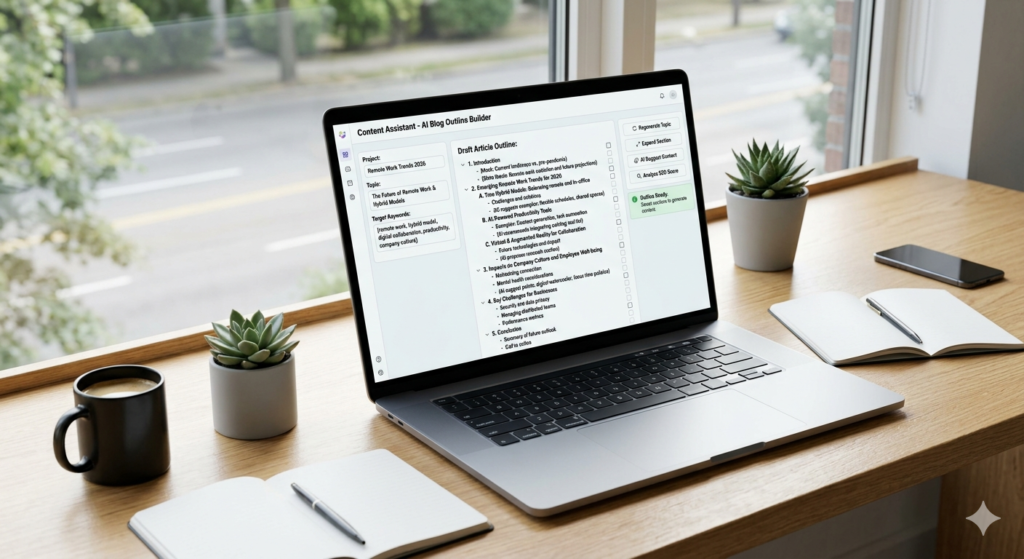
When people think about AI blogging tools, ChatGPT is usually the first name that comes to mind.
And honestly, there is a reason for that.
Bloggers use ChatGPT for:
- Content outlines
- Blog post ideas
- Keyword clustering
- Article drafts
- FAQs
- SEO-friendly headings
- Email writing
- Social captions
- Content repurposing
Instead of staring at a blank screen wondering what to write, bloggers can quickly generate ideas and create structured drafts.
Many bloggers use ChatGPT to brainstorm content ideas, outlines, and improve productivity.
For example, imagine you run a fashion affiliate blog.
You could ask ChatGPT to generate:
“10 blog post ideas about men’s summer fashion trends in 2026”
Within seconds, you get ideas that normally take much longer to brainstorm manually.
However, experienced bloggers rarely publish raw AI content.
They edit, add personal experience, rewrite sections, improve facts, and make articles feel more human.
That combination works best.
Why Bloggers Love ChatGPT
Saves Time
Instead of spending hours brainstorming or outlining content, bloggers can move faster.
Improves Productivity
It helps reduce creative blocks and speeds up content planning.
Helps With SEO Structure
Many bloggers use AI-generated heading structures to organize content better for Google search.
If you are exploring broader blogging workflows, creator tools, or AI productivity ecosystems, many bloggers also compare different content creation platforms to improve publishing systems.
Pros
- Fast content generation
- Great for brainstorming
- Beginner friendly
- Helps with productivity
- Useful for content repurposing
Cons
- Needs human editing
- Facts should always be verified
- Can sound robotic without personalization
Quick Summary: Why Bloggers Use AI Tools
Here is the biggest takeaway:
AI tools do not replace blogging skills.
They remove repetitive work so bloggers can focus more on creativity, strategy, storytelling, and audience growth.
And that is exactly why more bloggers are adopting them in 2026.
2. Jasper AI – Best for Long-Form Blog Writing
If you publish blog posts regularly, you already know one problem.
Writing consistently is hard.
This is where Jasper AI becomes useful.
Many professional bloggers and content teams use Jasper to create long-form articles, marketing content, product descriptions, email campaigns, and SEO-focused blog drafts faster.
Unlike simple text generators, Jasper is designed for content workflows.
For bloggers managing multiple websites or publishing frequently, this can save serious time.
How Bloggers Use Jasper AI
Bloggers commonly use Jasper for:
- Long-form blog post drafts
- Product review content
- Affiliate marketing articles
- Content rewriting
- SEO-friendly introductions
- Faster content scaling
Imagine running a niche blog where you publish five articles every week.
Instead of starting from scratch every single time, bloggers often use Jasper to generate a first draft and then improve it with personal experience, examples, and better storytelling.
That workflow helps maintain quality while publishing faster.
Pros
- Good for long-form content
- Saves writing time
- Helpful templates for bloggers
- Works well for content scaling
Cons
- Requires editing for originality
- Premium pricing may not suit beginners
- Human personalization is still necessary
3. Surfer SEO – Best AI Tool for Content Optimization
Writing a blog post is only half the job.
Ranking it on Google is the harder part.
That is why many bloggers use Surfer SEO.
Instead of guessing keyword placement or article structure, Surfer helps optimize content based on search engine expectations.
It analyzes ranking pages and suggests improvements such as:
- Keyword usage
- Heading optimization
- Content structure
- Readability improvements
- Search intent matching
For bloggers trying to increase organic traffic, this becomes extremely valuable.
For example, imagine writing a post targeting “best productivity apps for students.”
Without optimization, the article may struggle to rank.
With SEO guidance, bloggers can improve structure, topical relevance, and readability more effectively.
Why Bloggers Like Surfer SEO
Better Ranking Opportunities
Many bloggers use optimization tools to avoid under-optimized articles.
Easier Content Structure
Instead of random formatting, writers get a clearer roadmap for improving SEO performance.
Helpful for Beginners
You do not need advanced SEO knowledge to start improving content quality.
If you regularly publish educational or creator-focused content, building topic relevance across related articles can also strengthen internal linking strategy and topical authority.
For example, some bloggers naturally connect supporting resources like guides on free AI tools for students or content creator workflows when they match reader intent.
Pros
- Helpful SEO guidance
- Improves content structure
- Beginner friendly
- Supports search optimization
Cons
- Subscription cost
- Suggestions should not be followed blindly
- Still needs human judgment
4. Grammarly – Best AI Tool for Editing and Readability
Even great blog posts lose credibility when grammar mistakes appear everywhere.
That is one reason bloggers still rely heavily on Grammarly.
Writing fast often creates problems like:
- Grammar mistakes
- Awkward sentences
- Poor readability
- Repetitive wording
- Tone inconsistency
Grammarly helps clean that up quickly.
Instead of manually editing every sentence, bloggers use AI assistance to polish articles before publishing.
This becomes especially useful if English is not your first language.
Many successful bloggers treat Grammarly like a second editor.
Why Bloggers Use Grammarly
Better Readability
Simple, clear writing performs better online.
Readers prefer short sentences and conversational language.
Improved Professionalism
Cleaner writing builds trust.
That matters even more when writing affiliate content, tutorials, or informational blog posts.
Faster Editing
Instead of spending hours proofreading, bloggers speed up the editing process.
Pros
- Easy to use
- Improves clarity
- Fixes grammar mistakes
- Saves editing time
Cons
- Suggestions are not always perfect
- Premium version unlocks better features
Quick Tip: Do Not Depend Fully on AI
This is where many beginners make mistakes.
They copy AI-generated content and publish it immediately.
That rarely works long term.
Successful bloggers use AI as an assistant, not a replacement.
A better workflow looks like this:
- Use AI for research or outlines
- Write or rewrite naturally
- Add real examples and opinions
- Optimize for SEO
- Edit carefully before publishing
That process helps content feel more authentic, useful, and trustworthy for readers and search engines.
5. Canva AI – Best AI Tool for Blog Graphics and Visual Content
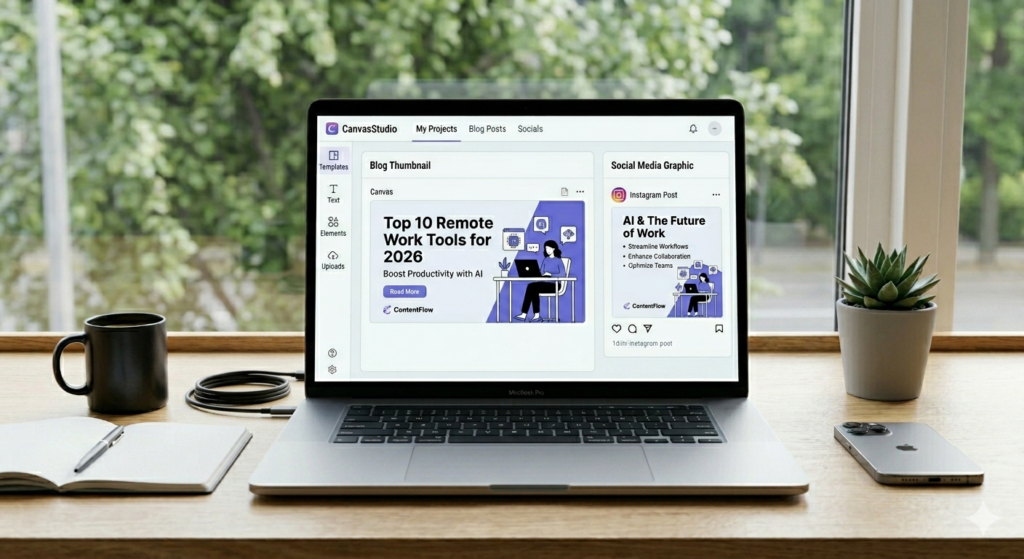
A great blog post is not only about writing.
Visuals matter too.
Readers are more likely to stay on a page when content looks clean, attractive, and easy to scan.
That is why bloggers are using Canva AI in 2026.
Instead of hiring expensive designers, bloggers now create:
- Featured images
- Pinterest graphics
- Blog banners
- Infographics
- Social media creatives
- Content visuals
Even beginners can create professional-looking graphics within minutes.
For example, if you publish a blog post about AI tools for creators, Canva makes it easier to design eye-catching blog thumbnails that improve clicks.
Many bloggers also combine blogging workflows with creator-focused AI platforms to improve content across websites and social media channels.
Why Bloggers Like Canva AI
Saves Design Time
Creating visuals manually takes effort.
Canva simplifies the process.
Beginner Friendly
You do not need graphic design experience.
Templates make everything easier.
Better Engagement
Visual content helps improve readability and keeps visitors engaged longer.
Pros
- Easy to use
- Great templates
- Useful for social media and blogs
- Beginner friendly
Cons
- Premium features require payment
- Some templates feel repetitive
Creators building blogs and social content together may also want to explore the best free AI tools for content creators 2026 for better workflow ideas
6. Semrush – Best AI SEO Tool for Keyword Research
One mistake many bloggers make is writing content nobody searches for.
That is where keyword research becomes important.
Semrush helps bloggers discover:
- High-traffic keywords
- Low-competition opportunities
- Search intent insights
- Competitor strategies
- Content gaps
Instead of guessing topics randomly, bloggers use data to create smarter content strategies.
Imagine spending six hours writing an article only to realize nobody searches for that topic.
Keyword tools reduce that risk.
For bloggers building authority websites, keyword planning becomes one of the most important long-term strategies.
Many creators who explore blogging systems also research related content ecosystems, student productivity tools, and niche AI recommendations to strengthen topical authority across their websites.
Why Bloggers Use Semrush
Better Content Planning
Keyword research removes guesswork.
Competitive Analysis
Bloggers can see what competitors are ranking for.
SEO Growth
Publishing optimized content improves ranking opportunities over time.
Pros
- Powerful keyword research
- Helpful SEO insights
- Great for content strategy
- Useful competitor analysis
Cons
- Expensive for beginners
- Takes time to learn
If your blog targets students or education audiences, researching topics like best free AI tools for students in India 2026 can help expand topical authority.”
7. Notion AI – Best AI Tool for Content Planning
Successful bloggers do not just write.
They organize.
That is why many bloggers now use Notion AI.
Blogging becomes messy without systems.
Ideas get forgotten.
Publishing schedules become inconsistent.
Research becomes disorganized.
Notion AI helps bloggers manage:
- Content calendars
- Research notes
- Blog planning
- Idea generation
- Workflow organization
Instead of saving ideas in random apps, bloggers keep everything in one place.
For example, you can create a weekly content workflow like:
- Topic research
- Keyword planning
- Draft creation
- Editing
- Publishing
- Social media promotion
That makes blogging far more organized.
Pros
- Excellent organization system
- Great for planning content
- Helpful productivity features
- Easy collaboration
Cons
- Learning curve for beginners
- AI features may feel basic for advanced users
Featured Snippet: What Are the Best AI Tools Bloggers Are Using in 2026?
The best AI tools bloggers are using in 2026 include ChatGPT, Jasper AI, Surfer SEO, Grammarly, Canva AI, Semrush, and Notion AI. These tools help bloggers write faster, improve SEO, create visuals, organize workflows, and grow content efficiently.
How to Choose the Right AI Tool for Blogging
Not every blogger needs every tool.
Your choice depends on your goals.
If You Want Faster Writing
Choose ChatGPT or Jasper AI.
If You Want Better SEO
Use Surfer SEO or Semrush.
If You Need Better Editing
Grammarly works well.
If You Want Better Graphics
Canva AI is a strong option.
If You Need Better Organization
Notion AI helps manage workflows.
A simple rule is this:
Start small.
Do not buy everything at once.
Choose tools based on your current blogging problems.
Common Mistakes Bloggers Make With AI
Many beginners misuse AI.
Here are common mistakes to avoid:
Publishing Raw AI Content
Always edit.
Add examples, stories, opinions, and real insights.
Ignoring SEO
Good writing alone is not enough.
Structure and keyword optimization matter.
Overusing Automation
Readers still connect with human experience.
Use AI to support creativity, not replace it.
Writing Without Strategy
Content should solve real problems for readers.
Random publishing rarely works long term.
Frequently Asked Questions
Which AI tool is best for bloggers in 2026?
ChatGPT is one of the best overall tools because it helps with brainstorming, writing, content planning, FAQs, and productivity.
Are AI tools good for SEO blogging?
Yes, when used correctly. Tools like Surfer SEO and Semrush help improve optimization, keyword research, and content structure.
Can beginners use AI blogging tools?
Yes. Most tools are beginner friendly and help simplify writing, planning, editing, and SEO tasks.
Can AI replace bloggers?
No.
AI speeds up workflows, but successful blogging still depends on creativity, experience, storytelling, trust, and useful content.
Final Thoughts
Blogging in 2026 is becoming smarter, faster, and more competitive.
The bloggers growing fastest are not necessarily writing more.
They are working smarter.
The best AI tools bloggers are using in 2026 help reduce repetitive work, improve SEO, speed up research, organize workflows, and make content creation easier.
But there is one important thing to remember:
AI alone does not build a successful blog.
Human creativity still matters.
The winning formula is simple:
Use AI for speed.
Use your own voice for trust.
That balance is what helps content perform better for both readers and search engines.
Before choosing a tool, think about your biggest challenge.
Do you struggle with writing, SEO, design, organization, or research?
Start there.
One good tool used correctly is better than ten tools used badly.