
Introduction: Why Your Website Gets No Traffic (And How to Fix It)
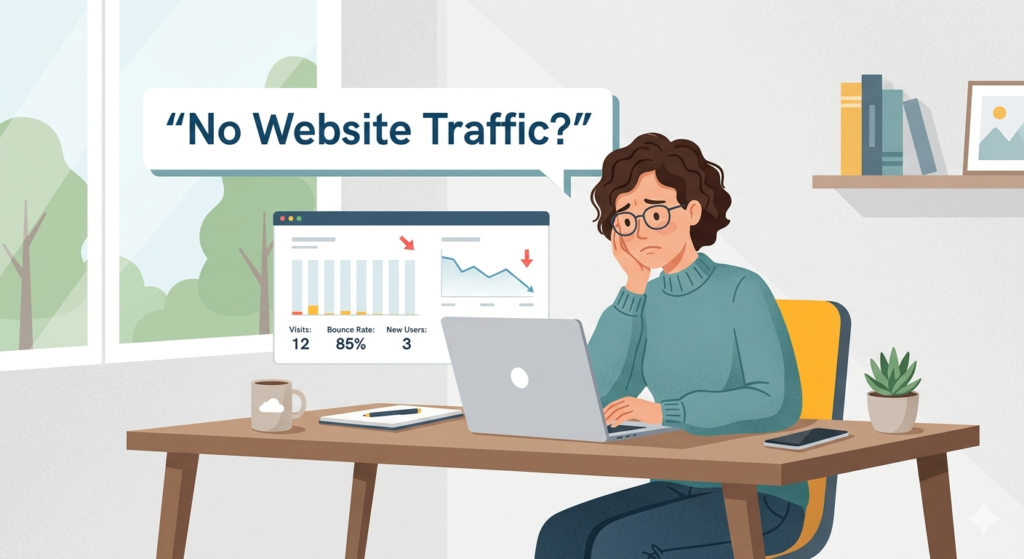
No Traffic on Your Website is one of the most frustrating problems for bloggers and website owners. You spend hours creating content, designing pages, and setting up your website, but still see almost zero visitors
You spent hours building your website.
You wrote blog posts, added images, designed pages, and maybe even shared a few links on social media. But after checking your analytics, the result feels disappointing—almost no visitors.
If this sounds familiar, you are not alone.
One of the biggest mistakes website owners make is assuming traffic automatically comes after launching a website. In reality, getting website traffic takes strategy, consistency, and smart optimization.
The good news?
You do not always need a huge budget to increase website traffic. In many cases, small improvements can make a massive difference.
For example, imagine two bloggers launching websites on the same day.
The first blogger publishes random articles without keyword research, weak titles, and no SEO strategy. The second blogger spends time understanding search intent, improves website speed, writes helpful content, and promotes articles strategically.
After six months, the second blogger usually gets significantly better results.
Why?
Because traffic growth is rarely luck—it is strategy.
If your website is struggling to get visitors, this guide will help you.
In this article, you will discover 25 proven methods to increase website traffic, improve visibility, attract readers, and grow consistently in 2026.
Before trying advanced strategies, however, it is important to understand why many websites fail to get traffic in the first place. If you are making common mistakes without realizing it, learning more about the reasons behind low traffic can help you avoid wasting months of effort.
If you are still struggling to get visitors, understanding the common reasons behind low website traffic can help you identify what may be stopping your growth before trying advanced strategies.
Why Is Your Website Getting No Traffic?
Many website owners immediately blame Google when traffic is low.
But most of the time, the problem is much simpler.
Here are some common reasons:
1. You Are Targeting the Wrong Keywords
Writing content without keyword research is like opening a store in the middle of nowhere and expecting customers to arrive.
If nobody searches for your topic—or if the competition is impossible to beat—your content may never rank.
That is why understanding keyword research matters. Learning how to find low-competition and high-intent keywords can dramatically improve your chances of ranking.
2. Your Content Is Not Solving Real Problems
Google prioritizes content that genuinely helps users.
If your article feels generic, copied, outdated, or lacks depth, readers leave quickly.
For example:
Instead of writing:
“SEO Tips for Beginners”
A better approach would be:
“10 Beginner SEO Mistakes That Stop Websites from Ranking”
Specific content usually performs better because it directly solves a problem.
3. Weak Headlines Reduce Clicks
Sometimes your page ranks—but nobody clicks.
Why?
Because the title is boring.
A title like:
“Website Traffic Tips”
Sounds generic.
Compare it to:
“No Traffic on Your Website? Try These 25 Proven Methods”
The second title creates curiosity and solves a problem immediately.
Strong headlines improve click-through rate (CTR), which may also help search performance over time.
4. Your Website Is Too Slow
Nobody likes waiting.
Research consistently shows users abandon websites that load slowly.
A slow website creates poor user experience, higher bounce rates, and weaker engagement signals.
Improving speed often becomes one of the easiest wins for website growth.
5. You Expect Results Too Fast
This is probably the biggest reason people quit.
Website traffic usually takes time.
Many websites see little progress during the first few months and then suddenly grow once authority improves.
Consistency matters more than motivation.
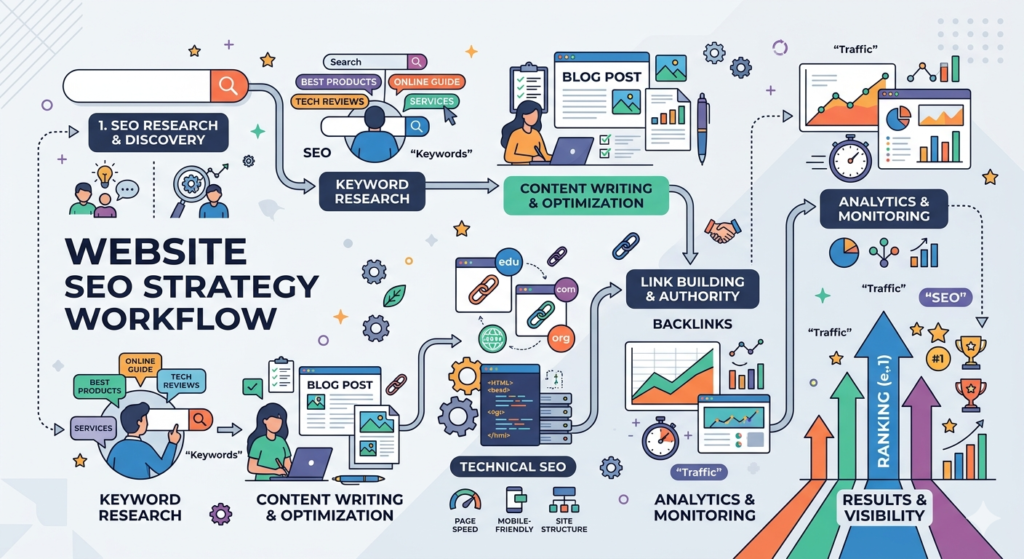
Method #1: Fix Your Website SEO Basics
Before trying advanced traffic hacks, fix the foundation.
Think of SEO like building a house.
Without a strong base, everything collapses.
Start by checking:
- Proper title tags
- Meta descriptions
- Mobile-friendly design
- Fast loading speed
- Keyword placement
- Internal linking
- Clear content structure
Even simple SEO improvements can make a noticeable difference.
According to guidance from search quality documentation and SEO experts, creating content that helps users while maintaining a strong technical foundation improves visibility over time.
For example:
Instead of stuffing keywords unnaturally, focus on writing naturally around search intent.
Bad example:
“Website traffic tips website traffic tips increase website traffic tips.”
Good example:
“Learning practical ways to improve website traffic helps businesses attract the right audience.”
That feels human and readable.
According to Google Search guidelines, creating helpful, people-first content and maintaining a strong website structure can improve long-term visibility.
If you are struggling to get visitors quickly, understanding practical strategies for increasing website traffic can help you discover more actionable ideas that complement SEO basics.
If you want more actionable ideas, exploring practical ways to increase website traffic can help you combine SEO basics with smarter growth strategies.
Method #2: Do Smart Keyword Research
If SEO is the engine, keywords are the fuel.
Many websites fail because people guess topics instead of researching demand.
Here is a simple process:
Step 1: Think Like Your Audience
Ask yourself:
What problem is my reader trying to solve?
For example:
Instead of targeting:
“Fitness”
Target:
“Best home workout for beginners”
Instead of:
“SEO”
Target:
“How to rank blog posts faster”
Specific keywords usually convert better.
Step 2: Find Low-Competition Keywords
New websites should avoid highly competitive topics.
Target easier opportunities first.
Long-tail keywords often help because:
- Lower competition
- Better user intent
- Higher conversion potential
- Easier rankings
Example:
Instead of:
“Digital Marketing”
Try:
“Best digital marketing tools for beginners”
Step 3: Study Search Intent
Search intent matters more than keyword volume.
Ask:
What does the user want?
Are they trying to:
- Learn something?
- Buy something?
- Compare products?
- Solve a problem?
Content matching intent performs better.
For example:
If someone searches:
“How to increase website traffic”
They want actionable steps—not a motivational speech.
That is exactly why this guide focuses on practical methods.
Learning keyword research the right way can make content planning much easier, especially if you want to stop guessing topics and start targeting ideas people actually search for.
Method #3: Write Better Blog Titles
Titles decide whether people click—or scroll away.
You may write amazing content, but weak headlines reduce traffic.
Here are formulas that work:
Use Numbers
Example:
“25 Methods to Increase Website Traffic”
Numbers create clarity.
Add Curiosity
Example:
“Why Your Website Gets No Traffic (And How to Fix It)”
This creates emotional interest.
Solve Problems
Readers search for solutions.
Example:
“10 SEO Mistakes That Kill Website Traffic”
Notice how direct it feels.
You can also experiment with emotional triggers like:
- Easy
- Fast
- Proven
- Free
- Beginner-friendly
- Powerful
But avoid clickbait.
Promise only what you can deliver.
A headline creates expectations.
Your content must satisfy them.
Method #4: Publish High-Quality Content Consistently
Many website owners publish five articles and stop.
Then they wonder why traffic never grows.
Here is the reality:
Consistency matters.
Think about it like going to the gym.
You do not see results after three workouts.
Websites work the same way.
Publishing useful content regularly helps search engines understand your niche and builds trust with readers over time.
But consistency does not mean publishing low-quality content every day.
One valuable article is better than five rushed posts.
A simple strategy:
- Publish consistently
- Focus on solving problems
- Answer real questions
- Update outdated content
For example:
If your niche is fashion, instead of generic posts like:
“Best Clothes in 2026”
Write:
“How to Style Oversized Shirts for Men in Summer 2026”
Specific topics often perform better.
Method #5: Improve Internal Linking
Internal linking is one of the easiest SEO wins.
Yet many beginners ignore it.
Internal links help:
- Users discover more content
- Search engines understand your website structure
- Improve page authority distribution
- Increase session time
For example:
If someone is learning traffic strategies, they may also want to understand common reasons behind low website visitors. Reading a detailed guide about why websites struggle to get traffic can provide extra clarity before applying growth methods.
The key is simple:
Add links naturally.
Do not force them into random paragraphs.
Ask yourself:
“Would this genuinely help the reader?”
If yes, add it.
Method #6: Make Your Website Faster
People hate slow websites.
If your page takes too long to load, visitors leave before reading anything.
A slow site affects:
- User experience
- Bounce rate
- Conversions
- SEO performance
Simple ways to improve speed:
Compress Images
Large images slow websites dramatically.
Resize and compress them before uploading.
Remove Unnecessary Plugins
Too many plugins often create performance issues.
Keep only what you actually need.
Use Caching
Caching improves load speed and creates a smoother experience.
Choose Better Hosting
Cheap hosting sometimes creates poor performance.
Good hosting matters more than people realize.
A faster website keeps users engaged.
And better engagement can support long-term SEO growth.
Method #7: Optimize for Mobile Users
Most people browse websites on phones.
Yet many websites still look terrible on mobile.
Common problems include:
- Tiny text
- Slow loading pages
- Broken layouts
- Hard-to-click buttons
Before publishing content, always test:
- Font readability
- Page speed
- Mobile responsiveness
- Navigation
Ask yourself:
“Can someone easily read this article on a smartphone?”
If the answer is no, fix it.
Method #8: Focus on Search Intent
Many people write content for keywords.
Smart creators write content for people.
This is where search intent matters.
For example:
Someone searching:
“Best running shoes for beginners”
Does not want the history of shoes.
They want recommendations.
Similarly, someone searching:
“How to increase website traffic”
Needs practical methods.
Not motivational quotes.
Types of search intent include:
Informational Intent
People want answers.
Example:
“How SEO works”
Transactional Intent
People want to buy.
Example:
“Best laptop under $500”
Navigational Intent
People want a website.
Example:
“Instagram login”
When your content matches intent, rankings often improve naturally.
Method #9: Create Better Headlines for Every Blog Post
Your title affects clicks.
But so do subheadings.
Readers scan content before reading.
That is why clear H2 and H3 headings matter.
Bad heading:
“SEO Information”
Better heading:
“7 SEO Fixes That Can Improve Website Rankings”
Specific headings improve readability.
If you struggle to write compelling headlines, learning how to create stronger blog titles can make a noticeable difference in click-through rates and reader engagement.
Also remember:
Good titles should be:
- Clear
- Specific
- Curiosity-driven
- Helpful
- Easy to understand
Avoid confusing wording.
Simple wins.
If writing strong headlines feels difficult, learning how to create better blog titles can help improve clicks and reader engagement.
Method #10: Use Long-Tail Keywords
Long-tail keywords are secret weapons for small websites.
Why?
Because competition is usually lower.
Example:
Instead of:
Try:
“Affordable running shoes for beginners”
Instead of:
“Website traffic”
Try:
“How to increase blog traffic for beginners”
Benefits of long-tail keywords:
- Easier rankings
- Better targeting
- Higher conversion potential
- More relevant traffic
This is especially helpful for new websites.
If you are unsure where to begin, understanding free keyword research methods can help you find topics people are already searching for without spending money on expensive tools.
Method #11: Refresh Old Content
One underrated SEO strategy:
Update existing articles.
Sometimes traffic drops because content becomes outdated.
Simple updates include:
- Adding fresh examples
- Improving formatting
- Updating statistics
- Fixing broken links
- Expanding thin sections
Google often prefers relevant and updated information.
Instead of writing endlessly, improve what already exists.
A refreshed article can sometimes outperform a brand-new one.
Method #12: Use Social Media to Drive Traffic
Do not rely only on Google.
Traffic can come from multiple sources.
Share content on:
- X (Twitter)
But do not spam links.
Instead:
Turn blog content into short tips, carousels, or quick videos.
Example:
Blog topic:
“How to Increase Website Traffic”
Instagram content idea:
“5 Reasons Your Website Gets No Visitors”
Then encourage users to read the full guide.
This strategy works surprisingly well for new websites trying to gain visibility.
Method #13: Start Building an Email List
Many website owners depend completely on Google traffic.
That is risky.
Why?
Because algorithms change.
An email list gives you direct access to your audience.
Even if rankings fluctuate, you can still bring visitors back.
Simple ways to grow an email list:
- Offer a free guide
- Create a checklist
- Share exclusive tips
- Give downloadable resources
For example:
A fashion website might offer:
“10 Must-Have Wardrobe Essentials Checklist”
The goal is simple:
Turn one-time visitors into repeat readers.
Method #14: Improve Content Readability
People do not read online content the same way they read books.
They scan.
That is why readability matters.
Simple ways to improve it:
Write Short Paragraphs
Large text blocks feel overwhelming.
Short paragraphs improve reading flow.
Use Subheadings
Subheadings make content easier to skim.
Add Bullet Points
Readers love quick information.
Write Like You Speak
A conversational tone feels natural and easier to understand.
For example:
Instead of:
“Implementing strategic optimization methodologies enhances engagement.”
Write:
“Simple improvements can help readers stay longer on your site.”
Much better.
Method #15: Optimize Meta Titles and Descriptions
Meta titles and descriptions influence clicks.
Think of them like advertisements inside search results.
Example:
Bad title:
“Website Tips”
Better title:
“No Traffic on Your Website? Try These 25 Proven Methods”
Meta descriptions should:
- Explain the benefit
- Include keywords naturally
- Create curiosity
- Stay easy to understand
A strong title plus description can improve click-through rates significantly.
Method #16: Create Helpful, Problem-Solving Content
Google rewards content that genuinely helps users.
Before publishing anything, ask:
“What problem does this solve?”
Weak content:
“SEO Information”
Better content:
“7 SEO Mistakes That Stop Websites From Ranking”
People search for solutions.
Not fluff.
This is why practical content usually performs better.
Method #17: Use Pinterest for Free Traffic
Many people ignore Pinterest.
Big mistake.
Pinterest works like a visual search engine.
It performs especially well for niches like:
- Fashion
- Blogging
- Fitness
- DIY
- Beauty
- Home decor
Create simple, clickable pin designs and link them to blog posts.
Example:
Blog:
“How to Increase Website Traffic”
Pinterest title:
“25 Smart Ways to Get More Website Visitors”
Consistency matters here too.
Method #18: Answer Questions People Are Already Asking
One of the easiest content strategies:
Answer existing questions.
Think about what people search for.
Examples:
- Why is my website getting no traffic?
- How long does SEO take?
- How can beginners grow blog traffic?
- Why are my blog posts not ranking?
Question-based content often performs well because it directly matches user intent.
Method #19: Improve User Experience (UX)
Traffic means little if visitors leave immediately.
Bad user experience hurts engagement.
Common UX problems:
- Too many popups
- Slow loading pages
- Hard navigation
- Cluttered layouts
Good UX feels simple.
Visitors should instantly understand:
- Where they are
- What to read next
- How to navigate
A clean website encourages longer sessions.
Method #20: Build Topic Authority
Random content confuses search engines.
Imagine a website publishing:
- SEO tips
- Dog food reviews
- Crypto news
- Fashion advice
No clear focus.
Instead, build topical authority.
For example:
A blogging website should cover:
- SEO
- Content writing
- Website traffic
- Blogging tools
- Keyword research
This helps search engines trust your expertise.
Method #21: Promote Content More Than Once
Many people share content one time and forget it.
Smart creators repurpose content.
Example:
One blog post becomes:
- Instagram carousel
- Pinterest post
- Facebook post
- Email newsletter
- Short video
More visibility = more traffic opportunities.
Do not assume people saw it the first time.
Method #22: Analyze Your Website Data
Guessing hurts growth.
Data helps.
Use analytics tools to understand:
- Which pages get traffic
- Bounce rate
- Top-performing content
- Traffic sources
- User behavior
When you understand what works, improving becomes easier.
For example, reviewing website performance using analytics tools can help identify which pages bring visitors and which need improvement.
Stop guessing.
Start measuring.
Method #23: Focus on Click-Through Rate (CTR)
Sometimes pages rank but receive no clicks.
This usually happens because:
- Weak titles
- Poor meta descriptions
- Low curiosity
Example:
Weak title:
“Traffic Tips”
Better title:
“No Traffic on Your Website? 25 Proven Ways to Fix It”
Small changes in wording can make a huge difference.
Method #24: Keep Updating SEO Knowledge
SEO changes constantly.
Strategies that worked years ago may stop working.
Follow trusted industry insights, learn new trends, and stay updated with search best practices to avoid outdated tactics.
The websites that adapt often outperform those that stay stuck.
Method #25: Stay Consistent (Most Important Method)
This is the hardest truth.
Most websites fail because owners quit too early.
Traffic growth takes patience.
Sometimes nothing happens for months.
Then suddenly:
Clicks increase.
Pages rank.
Visitors grow.
Momentum builds.
Success online often comes from consistency, not luck.
Publishing useful content, improving SEO, learning from mistakes, and showing up regularly matters more than overnight hacks.
Final Thoughts
If your website has no traffic right now, do not panic.
Almost every successful website started the same way.
The difference?
Consistency and smart strategy.
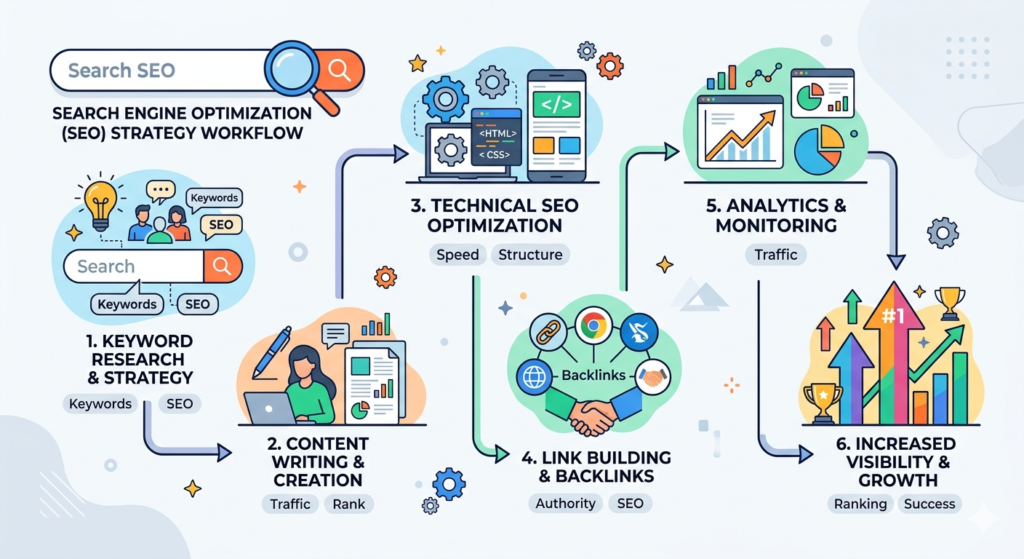
Start with basics:
- Fix SEO foundations
- Research better keywords
- Improve titles
- Create helpful content
- Focus on user experience
- Promote content regularly
You do not need to implement all 25 methods at once.
Pick a few.
Apply them consistently.
Track progress.
Then improve over time.
Website traffic growth is usually slow in the beginning—but once momentum starts, results become much easier to scale.
The important thing is simple:
Keep going.